

Glossary
This is a comprehensive listing of terms used in reference to USAF and USSF patch collecting. It includes collector, heraldic, embroidery, and uniform terms as well as official definitions prescribed by the Department of the Air Force. While this listing is comprehensive, it is not definitive. If there are additional terms which you believe should be added, please contact the Webmaster.
Special thanks to Greg Ogletree who substantially contributed to the glossary.
Index
- Add-On or Add-On Patch
- Adopted Patch
- Air Force Colors
- Air Force Official Emblem Color Palette
- Alerts Patch
- Altered or Altered Patch
- Anniversary Patch
- Approved Patch
- Arc
- Authentic Patch
- Back Patch
- Backing
- Backing Support
- Base Material
- BEVo
- Black Border
- Blazer Patch
- Blazon
- Bullion Patch
- Burns (marking on back of patch)
- Camouflage or Camo
- Camouflaged or Camouflaged Patch
- Cheesecloth Backing
- Chenille Patch
- Class Patch
- Color Patch
- Combat Hours Patch
- Combat Missions Patch
- Computer Embroidery
- Current Issue
- Custom Made
- Cut Edge (CE)
- Damaged
- Deactivation Patch
- Death Patch
- Decaled
- Deployment Patch
- Desert or Desert Subdued
- Dexter
- Disc
- Distinctive Insignia (DI)
- Distinctive Unit Insignia (DUI)
- Doctored
- Duty Arc
- Duty Identifier or Duty Identifier Patch
- Element
- Emblem
- Embroidered on Twill
- Embroidered Patch
- Embroidery
- Error Patch
- Eye-Candy
- Factory Patch
- Fake, Fakes or Fake Patch
- Fantasy Patch
- Felt
- Felt Edge
- Flag Drawing
- Flat Edge
- Flying Hours Milestone Patch
- Forest Subdued
- Friday Patch
- Full Color Patch
- Fully Embroidered Patch
- Functional Emblems
- Functional Image
- Gaggle Patch
- Gauze or Gauze Backing
- Generic Patch
- Ghost
- Graduate Patch
- Hand-Made Patch
- Hat Patch
- Heat-Seal Backing
- Heraldry
- Heritage
- Heritage Patch
- Honors
- Hook & Loop Fastener
- Hours Milestone Patch
- Hours Patch
- Identifier Patch
- In-Country Made Patch
- Inactivation Patch
- Inscription
- Insignia
- Iron-on
- Jacket Patch
- Knock-Offs
- Launch Patch
- Leather Patch
- Leatherette Patch
- Legitimate Patch
- Lineage
- Lineage & Honors History
- Logo
- Loom
- Manufacturer’s Overruns
- Manufacturer’s Patch
- Manufacturer’s Sample
- Merrowed Edge (ME)
- Missions Patch
- Morale Patch
- Motto
- Multicam Subdued
- Muted or Muted Patch
- New Old Stock (NOS)
- Nipped
- No-Glo
- Novelty Patch
- Official Emblem
- Official Patch
- Operation ENDURING FREEDOM Camouflage Pattern (OEF-CP) Subdued
- Operational Camouflage Pattern (OCP) Subdued
- Overedge Stitch
- Overlock Stitch
- Overruns
- Painted Patches
- Patch
- Patch King (Patch Manufacturer & Reseller)
- Partially Embroidered
- Pencil Pocket Patch
- Pigtail
- Pizza Patch
- Plastic Backing
- Pocket Patch
- Polyvinyl Chloride (PVC) Patch
- Previous Issue
- Prototype Patch
- Puff Embroidery
- Reject or Rejected Patch
- Replicas
- Repro, Reproduction or Reproduction Patch
- Retirement Patch
- Reunion Patch or Reunion Piece
- Rocker
- Rolled Edge
- Sample or Sample Patch
- Schiffli Edge
- Schiffli Embroidery
- Screened Patch or Screenprinted Patch
- Scroll
- Selvedge
- Shield
- Shoulder Sleeve Insignia (SSI)
- Silk-Screened Patch
- Sinister
- Soiled
- Sorties Patch
- Souvenir Patch
- Spice Brown Color Criteria, Spice Brown Color Scheme or Spice Brown Subdued
- Spoof Patch
- Subdued or Subdued Patch
- Swiss Embroidery
- Tab or Tab Patch
- Tan Patch
- Temporary Duty (TDY) Patch
- The Institute of Heraldry (TIOH) Air Force Color Palette
- Theater-Made or Theater-Made Patch
- Theater-Make or Theater-Make Patch
- Tinsel
- Tracking
- Twill, Twill Fabric or Twill Weave
- Variation
- VELCRO©
- Vivid Patch
- Wing King Patch
- Woodland Subdued
- Wool Fabric
Add-On Patch [also “Add-On”, type of Morale Patch]
A patch that is designed to fit (typically) above or below another patch. Add-on patches are typically contoured to match the shape of the other patch giving the appearance that the two patches are one patch. Add-on patch typically indicate a position, qualification or number of flying hours/missions/alerts but may be used for any purpose.
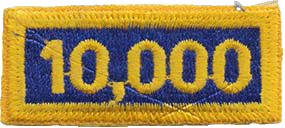
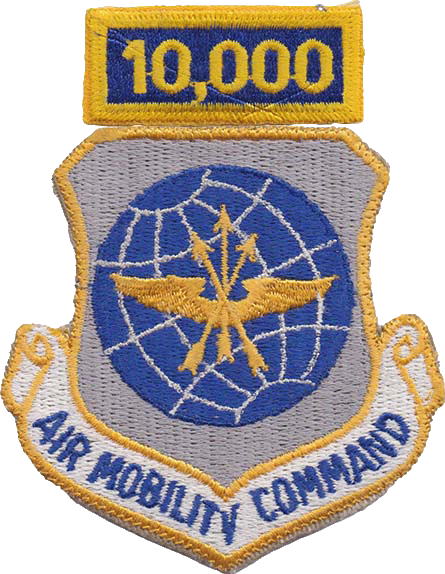
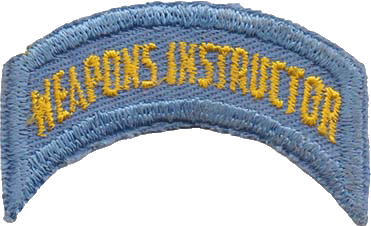
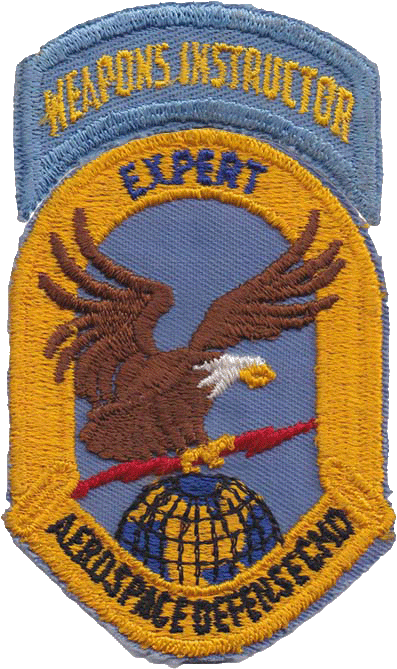
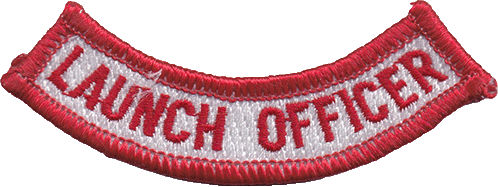

(From the Webmaster’s Collection)
Return to Index
Adopted Patch
A patch produced by an individual or vendor that was not commissioned or ordered by an organization or one of its members, but was subsequently adopted for use by that organization.
Return to Index
Air Force Colors
The official colors of the USAF are Air Force Blue and Air Force Yellow. Air Force Instruction (AFI) 84-105, Organizational Lineage, Honors and Heraldry provides the significance of those colors:
“Air Force yellow signifies the excellence required of Air Force personnel; Air Force (ultramarine/reflex) blue signifies the sky as the primary theater for Air Force operations.”
In 1959, Air Force Regulation 900-3, Organizational Emblems, dated 6 November 1959, suggested that organizations, “Consider including the Air Force colors, i.e., ultramarine blue and golden yellow, to identify the unit as being part of the United States Air Force.” Subsequently Air Force Regulation 900-3, Organizational Emblems, dated 7 November 1966, required official organizational emblems to “have as prominent colors on the shield or disc the official Air Force colors, ultramarine blue and golden yellow.” This requirement is still in effect to this day.
| Color | Yarn | Textile | Epoxy Chip | Pantone Matching System (PMS) | Hex | Federal Standard |
|---|---|---|---|---|---|---|
| Air Force Yellow | 67103 | 65023 | 8 | 116 | FFCD00 | 13655 |
| Ultramarine | 67118 | 65010 | 18 | Reflex | 001689 | – |
Return to Index
Alerts Patch [Type of Morale Patch]
Return to Index
Altered Patch [also “Altered”]
A patch intentionally altered from the original version. This includes cutting off a rocker, scroll, or tab, or adding embroidery (often difficult to detect without a close examination of the back side). Additional embroidery post-production may include the addition of one or more elements to the field, but is also done to correct a error in the inscription (designation or motto).
Return to Index
Anniversary Patch [Type of Morale Patch]
A type of morale patch produced to commemorate or celebrate the date or year of a notable event. Such events include the anniversary of an organization’s establishment or the number of years a particular organization has operated a specific type of aircraft.
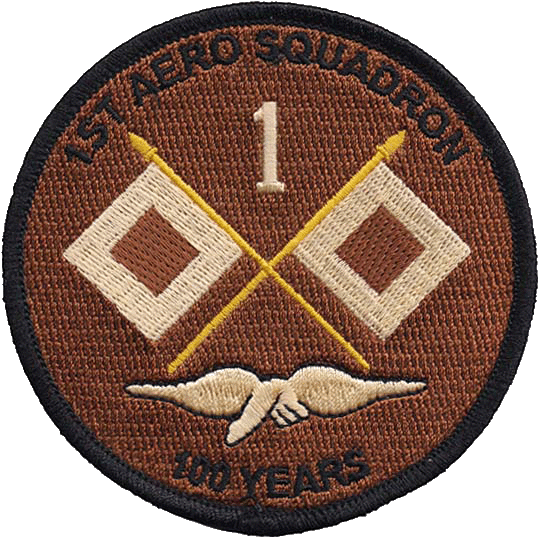
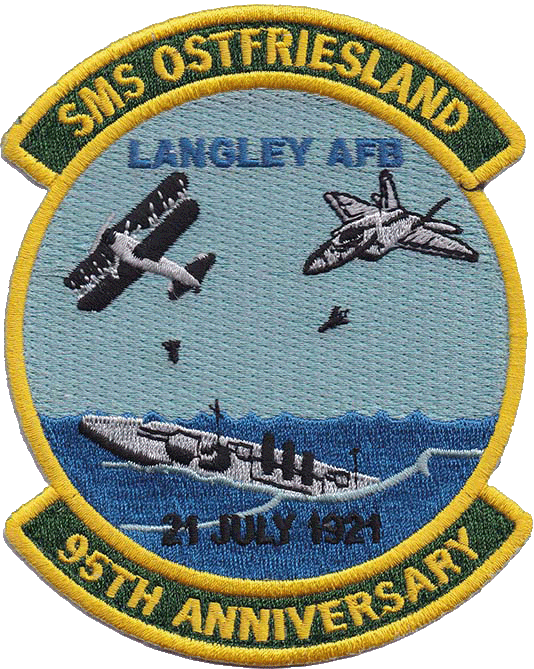
of the Sinking of the SMS Ostfriesland
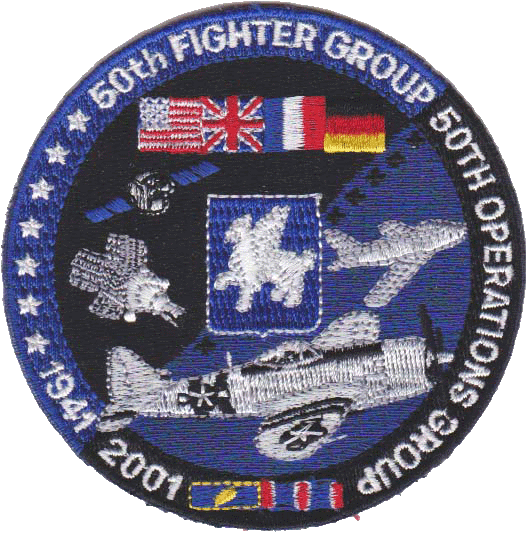
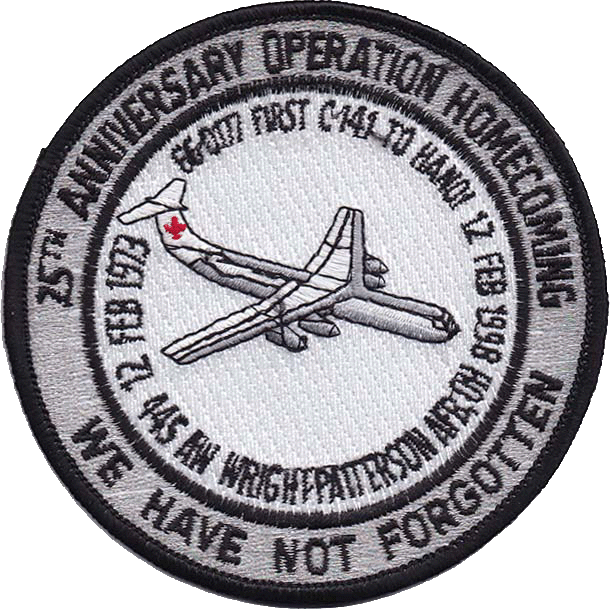
(From the Webmaster’s Collection)
Return to Index
Approved Patch
Any patch authorized by a competent authority, such as a commander or director, for wear or other use by an organization or its members. A patch may be approved, but not be an official patch.
Return to Index
Arc
Return to Index
Authentic Patch [also Legitimate Patch]
A copy or close imitation of an authentic patch. Overruns, heritage patches and reunion patches are NOT considered reproductions by most collectors.
Return to Index
Backing [also Backing Support]
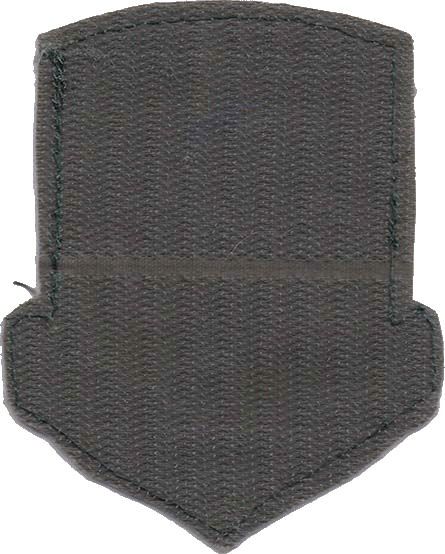
Material attached to the base material on the back of a patch. It is used to prevent fraying; provide strength, stability and support; and/or a means to adhere the patch to a surface. Types of backing used for patches include adhesive, fabric, gauze, heat-seal, plastic, and hook and loop fastener(VELCRO©).
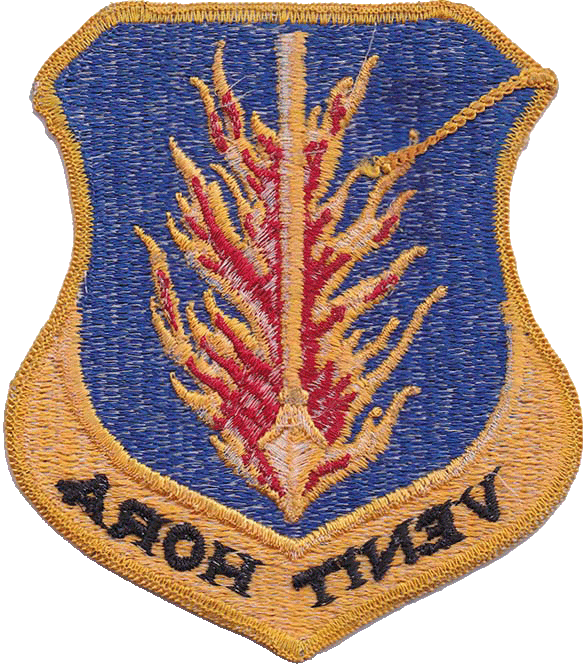
97th Bombardment Wing
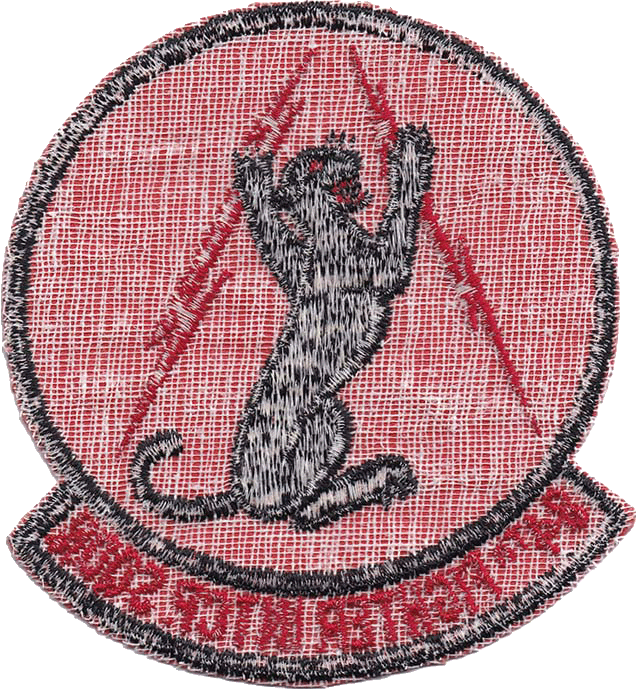
84th Fighter-Interceptor Squadron
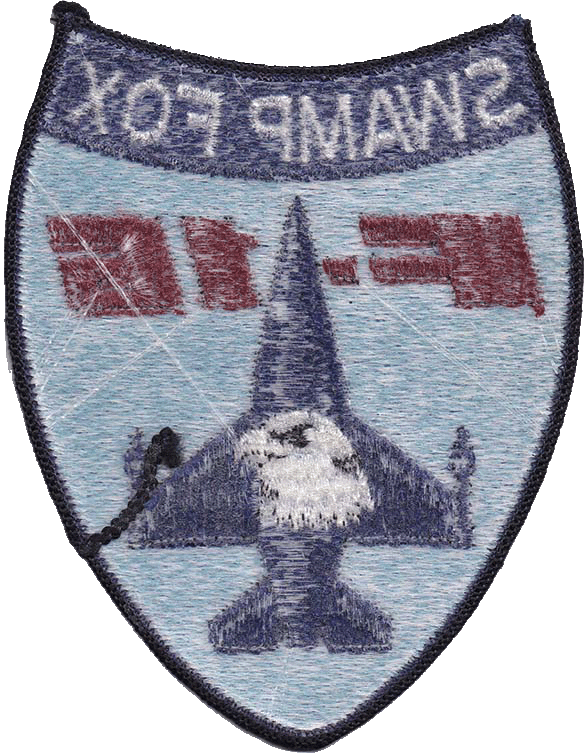
157th Tactical Fighter Squadron F-16
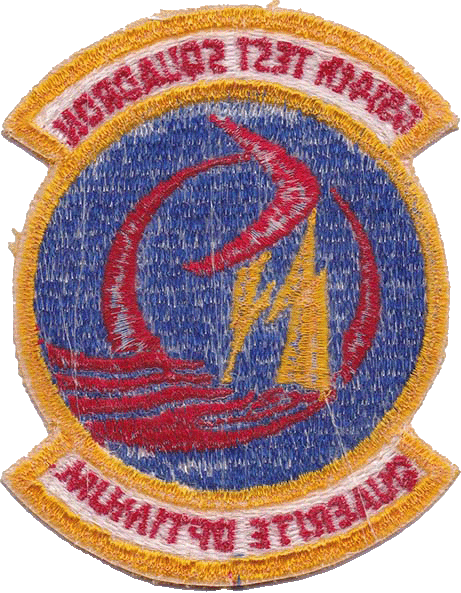
6514th Test Squadron
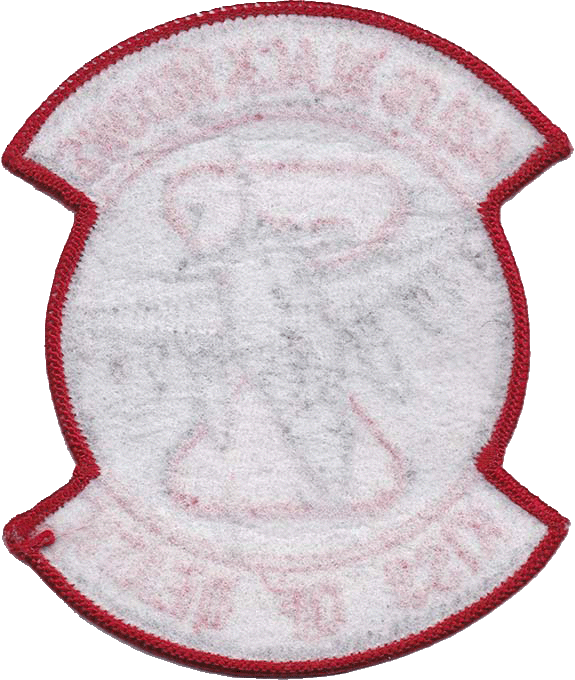
421st Fighter Squadron Black F-16 Kiss of Death
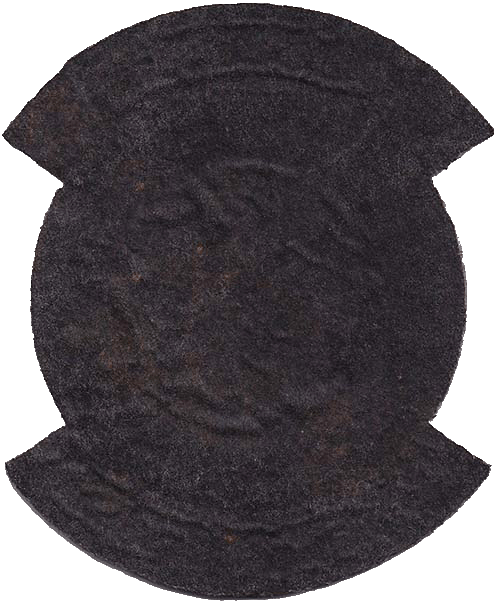
93d Fighter Squadron
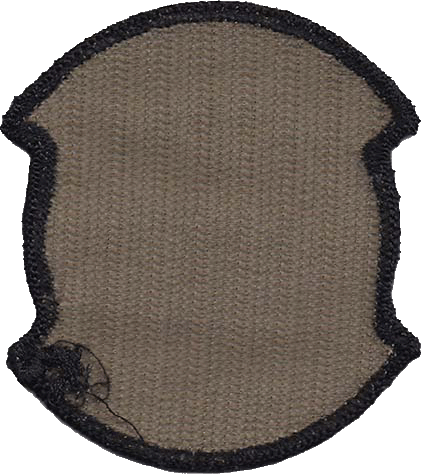
26th Special Tactics Squadron
61st Tactical Airlift Squadron
(From the Webmaster’s Collection)
Return to Index
Back Patch [also Jacket Patch]
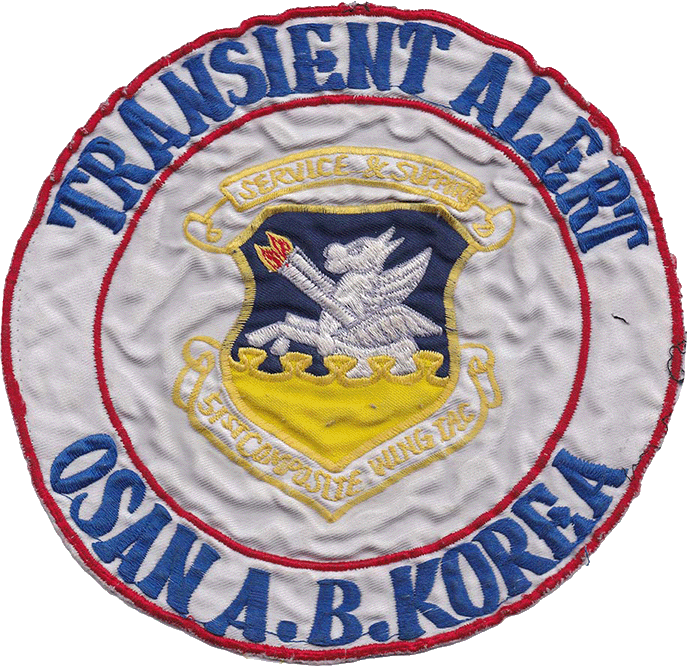
Term used to refer to a very large patch, typical seven (7) inches or greater in height, width, or diameter. The term originates from large patches that were worn on the back of coveralls or jackets. This type of patch is commonly worn on the back of coveralls worn by “transient alert” personnel (maintenance personnel who service visit aircraft). These large patches were also produced for use on engine covers, helmet bags and some organizational flags.
(From the Webmaster’s Collection)
Return to Index
Base Material
The material that forms the foundation or “base” of a patch. Such materials include leather, vinyl, plastic and cloth fabric. For cloth patches, the base material is typically twill, but can also be any other material such as wool, felt or sateen.
Return to Index
BEVo [also BeVo, Be Vo, BEVO]
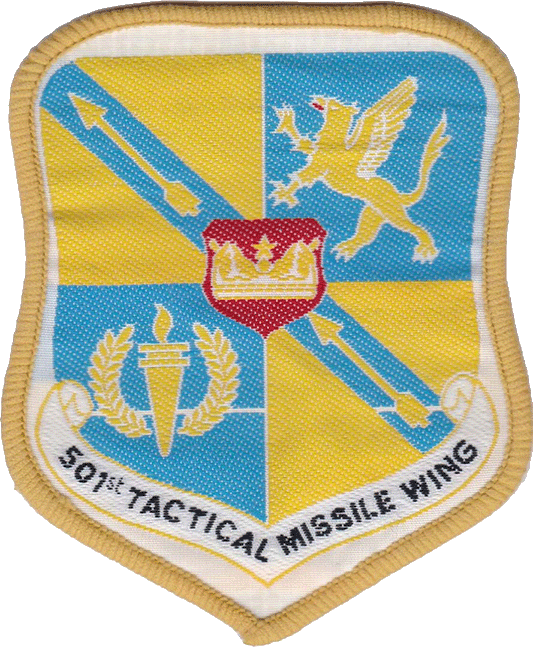
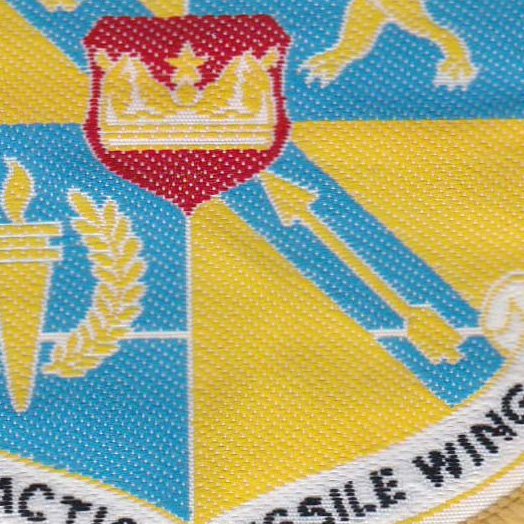
Term adopted by collectors to refer to a tight weave machine-woven embroidery manufacturing style most commonly used by German manufacturers. This method of manufacturing weaves rayon (also referred to as “fake silk”) or cotton thread on a rayon or cotton thread base. While the name is derived from the one of the manufacturers, Bandfabrik Ewald Vorsteher located in Wuppertal-Baren, Germany, other vendors also produced this type of patch. This style of manufacturing originated in France in the 1800s.
(From the Webmaster’s Collection)
(From the Webmaster’s Collection)
Return to Index
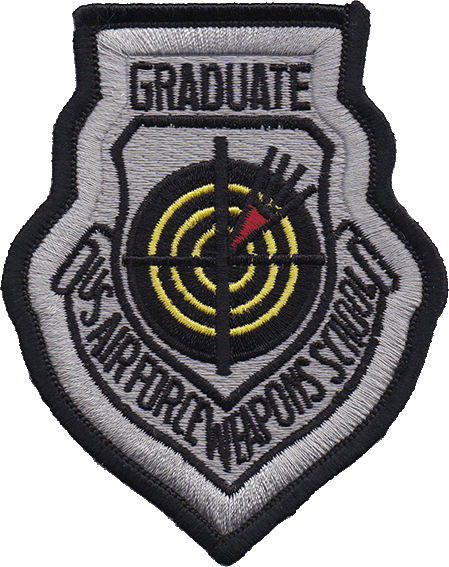
Black Border
Term used by USAF personnel to refer to USAF Weapons School Instructors and USAF Test Pilot School Instructors. Instructors and former instructors of these organizations wear a version of their respective school’s graduate patch with a black border, hence the term.
(From the Webmaster’s Collection)
Return to Index
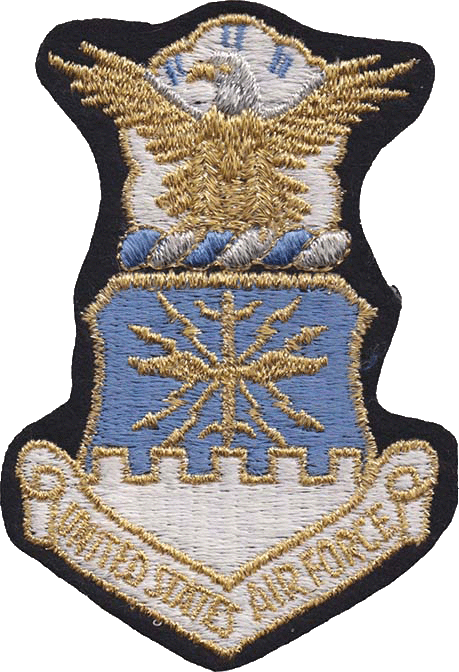
Blazer Patch
Patch worn by USAF members on blazers (sport coats) for social occasions and on dress uniforms for formal occasions. Bullion patches were often used as blazer patches.
(From the Webmaster’s Collection)
Return to Index
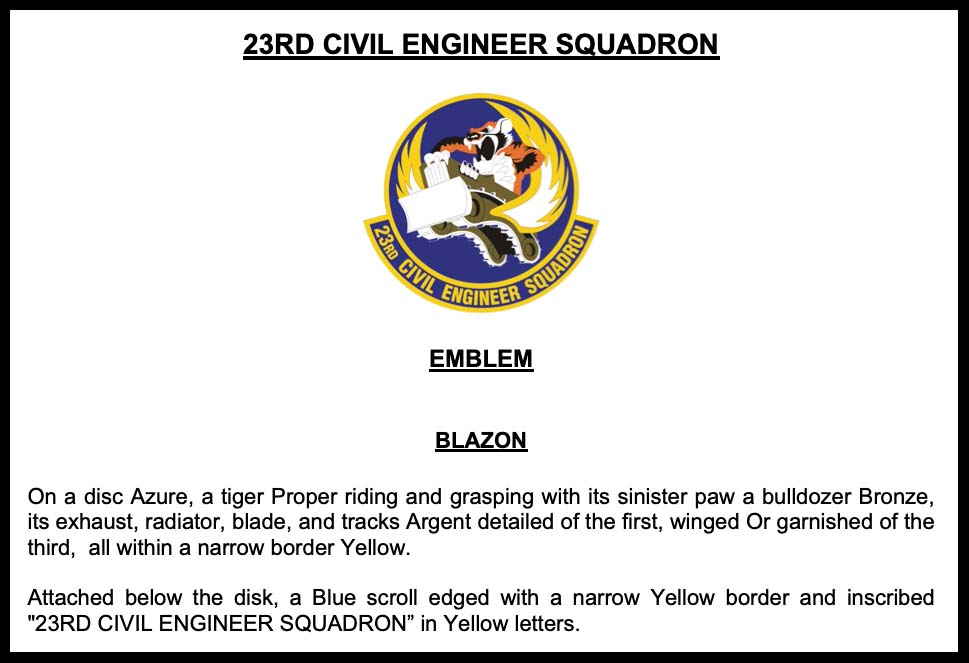
Blazon
The technical description of heraldic insignia. The blazon uses heraldic terms derived from French to describe the insignia. Blazons are typically only used for official emblems. The blazon is included as part of the “Emblem Significance and Description” document provided as part of an organization’s official emblem approval package.
(Courtesy of the Air Force Historical Research Agency)
Return to Index
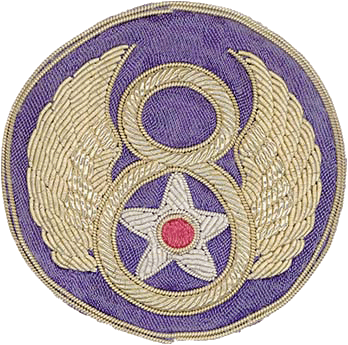
Bullion Patch
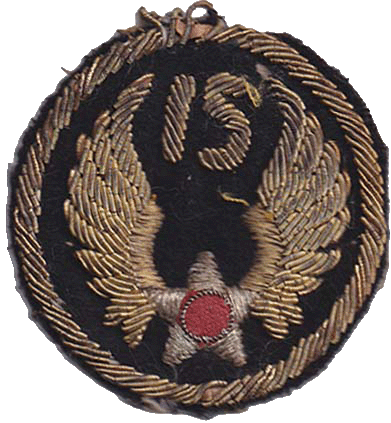
Embroidered patch, made with metal wire thread on a cloth backing and typically hand-sewn that are often one-of-a-kind. In recent years, bullion patches are often manufactured in Pakistan and India. During World War II, some servicemembers obtained bullion patches locally and wore them as Shoulder Sleeve Insignia on their uniforms. Prior to the 1980s, bullion patches were worn on blazers for social occasions (blazer patches) and on dress uniforms for formal occasions. Since bullion patches were never widely used by the USAF and USSF most are reproductions.
(From the Webmaster’s Collection)
(Smithsonian Air and Space Museum Photo)
Return to Index
Burns (Marking Found on the Back of Some Patches)
Inscription in either ink or marker appearing on the back of some patches. This marking indicates that the patch was once owned by Rick Burns, a retired Los Angeles fireman, who would write his last name on the back of every patch in his collection. He sold his collection and many of these patches have found their way into other individual’s collections.
Return to Index
Camouflage
Return to Index
Chenille Patch
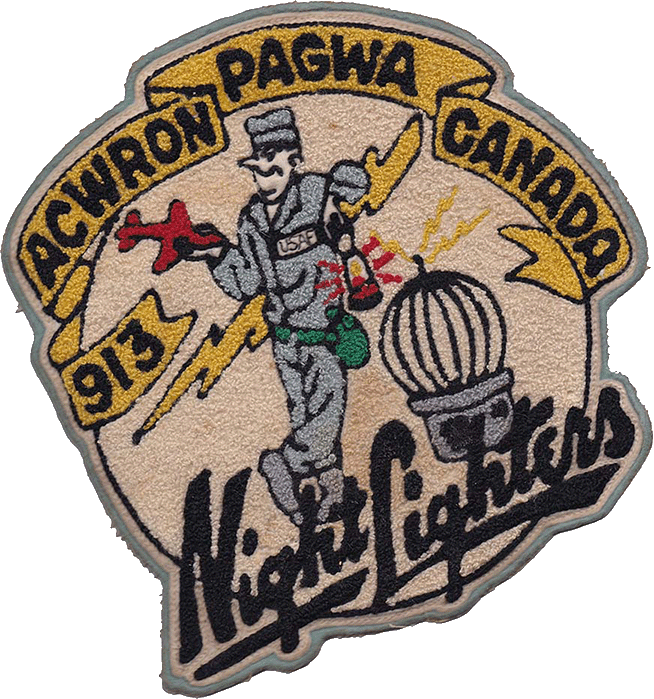
Type of patch in which a loop stitch is formed on the top side of fabric using heavy yarn of wool, cotton, or acrylic thus giving a “rug” like appearance. In the United States, this style is often used for high-school “letter” patches. This style is uncommon in USAF patches and most that exist date from the 1950s.
(From Webmaster’s Collection)
Return to Index
Class Patch [Type of Morale Patch]
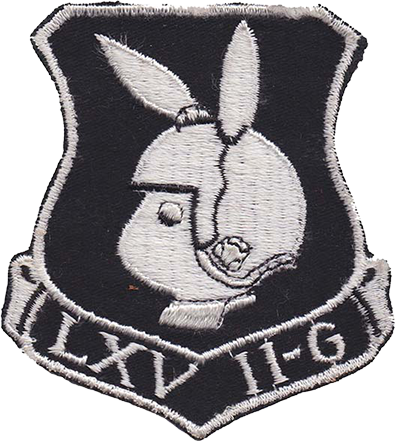
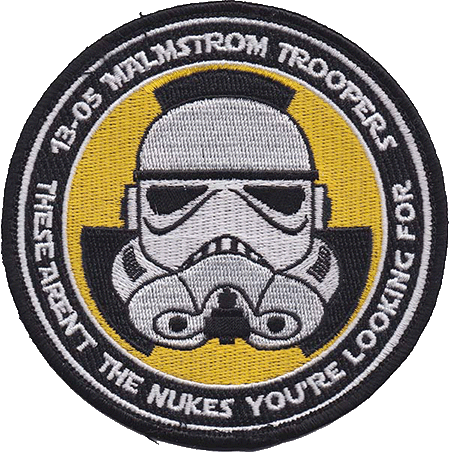
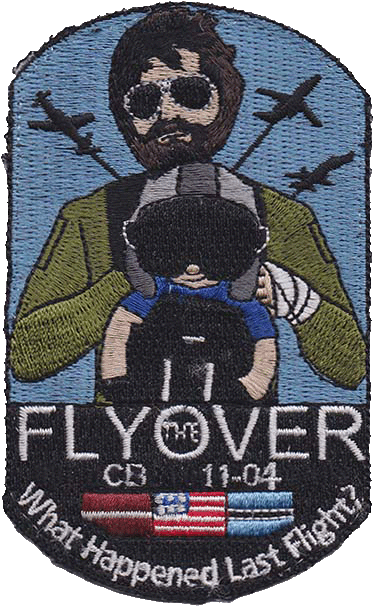
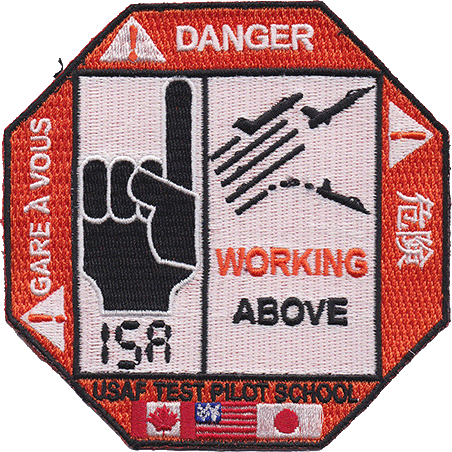
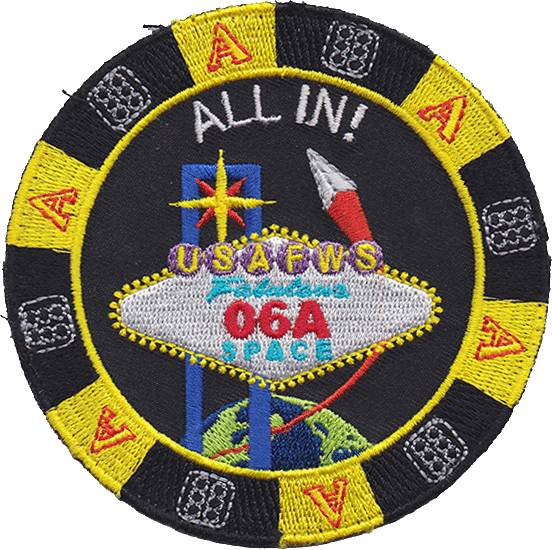
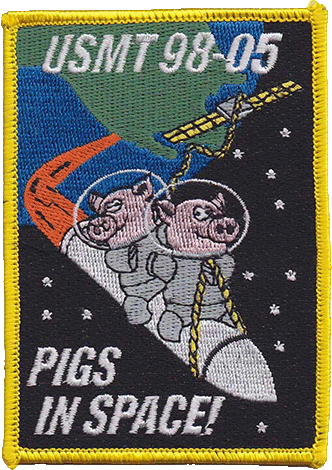
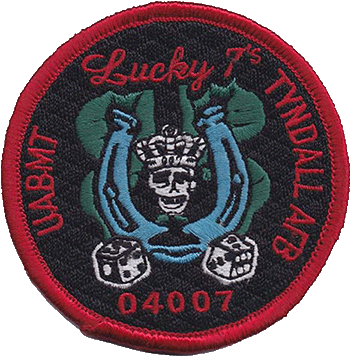
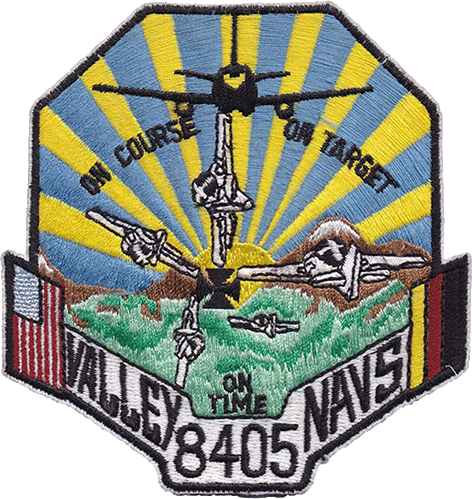
Type of morale patch produced by members of a training class. They are not official patches and may or may not be approved patches. The class patch tradition dates back to students attending Undergraduate Pilot Training (UPT) in the 1950s. By the 1960s, almost all UPT classes had adopted a class patch and today the tradition is effectively mandatory for classes attending pilot training. The tradition has spread far beyond UPT, with many other training classes adopting the tradition including, but not limited to:
- USAF Weapons School
- USAF Test Pilot School
- Undergraduate Air Battle Management (ABM) Training
- Undergraduate Navigator Training (UNT) & Specialized Undergraduate Navigator Training (SUNT) [Both Defunct]
- Undergraduate Space & Missile Training, Undergraduate Space Training, Officer Space Pre-Requisite Training, Space 100, & Officer Undergraduate Space Training [All Defunct]
- Undergraduate Missile Training
- Undergraduate Combat Systems Officer Training (UCT)
Classes are typically designation by Fiscal Year (FY) or Calendar Year (CY) when there is a single class at a specific training school or in the case of multiple classes at a specific training school occurring in the same year, by the FY or CY the class is graduating with a class letter or number. UPT and UNT classes up until 1968 used the notation “Year-Class Letter” (e.g. 66-A or 68-D. IN 1969, UPT switch to the current system which designate the class by the FY they will graduate and a class number, e.g. 90-08 or 25-09. USAF Weapon School and USAF Test Pilot School classes use the CY they will graduate and a letter, e.g. 19B or 24A.
(From the Webmaster’s Collection)
Return to Index
Computer Embroidery
Style of embroidery made on computer-driven single and multi-head sewing machines allowing for a much greater level of detail than older methods of embroidery. Computer embroidery was developed in the 1970s and became widespread in the mid-1980s. It is now the primary manufacturing method for embroidered patches.
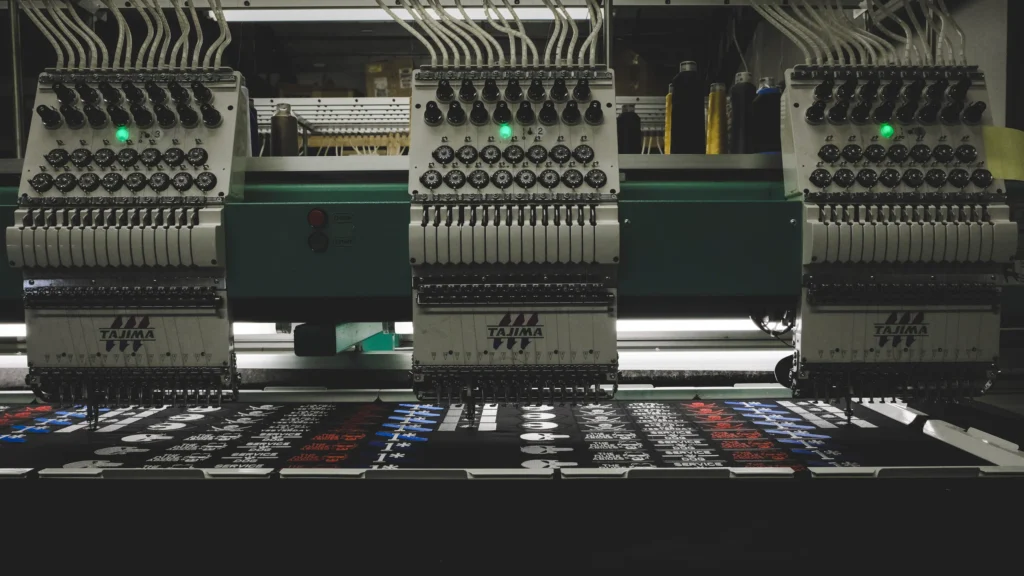
(Photo courtesy of Kentucky Emblem)
Return to Index
Current Issue
Patch currently issued and used by member(s) of an organization.
Return to Index
Custom Made
Return to Index
Cut Edge (CE) [also Flat Edge, Schiffli Edge]
Type of border that is sewn on a patch then cut to shape, thus making the base material visible outside the sewn border. Cuts are most commonly made by a die, hand, a hot-edge knife or in recent times, a laser. This type of border was extremely common on patches prior to the wide-spread adoption of the merrowed edge in the 1960s. Most irregular shaped patches use a cut edge to prevent the fraying associated with a merrowed edge.
Return to Index
Damaged
Physical disfacement of a patch to include, but not limited to, tears, cuts, holes, stains, burn marks, fraying, removed thread, discoloration and rust. In general, damage reduces the value of patch. Patches which have mounting residue on the back, even heavy residue, are not considered damaged unless its presence or effects are visible while viewing from the front (e.g., the glue has soaked through the fabric and stained or discolored the front).
Return to Index
Death Patch [Type of Morale Patch]
Term occasionally used in reference to a morale patch produced to commemorate the inactivation of a unit/organization or the retirement of a weapon system, often with the year(s) indicated in the design or on scroll. See also Inactivation Patch, Retirement Patch.
Return to Index
Decaled
Some vintage patches, especially WWII leather patches, were created by applying a decal to the surface rather than by painting or embroidering the design elements. These typically show their age by cracking and/or flaking as the decal becomes more and more brittle with age.
Return to Index
Deployment Patch [Type of Morale Patch]
Type of morale patch produced by units/organizations or individuals for real world, exercise or training deployments. See also TDY Patch.
Return to Index
Desert Subdued [also Desert, Tan]
Subdued color palette featuring predominately brown and tan color tones for wear on the desert color scheme uniforms. The official Air Force desert color palette was created in the 1990s and consists of black, spice brown and khaki (see table below). This palette is used for converting full color official patches to desert colors for wear on the Desert Camouflaged Uniform (DCU), the Desert Flight Duty Uniform (DFDU) and other desert uniforms. Many morale patches use additional colors in addition to the three approved as part of the official palette.
| Number | Color | Yarn | Textile | Pantone Matching System (PMS) | Hex |
|---|---|---|---|---|---|
| 1 | Black | 67138 | 65018 | N/A | 000000 |
| 2 | Khaki | 67193 | 80162 | 452 | B2A77E |
| 3 | Spice Brown | 67196 | 80129 | 168 | 75391C |
Return to Index
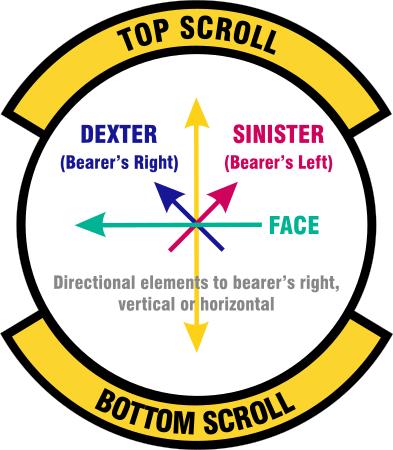
Dexter
The right-hand side of the shield from the standpoint of the person behind it. Source: Guide to Air Force Heraldry.
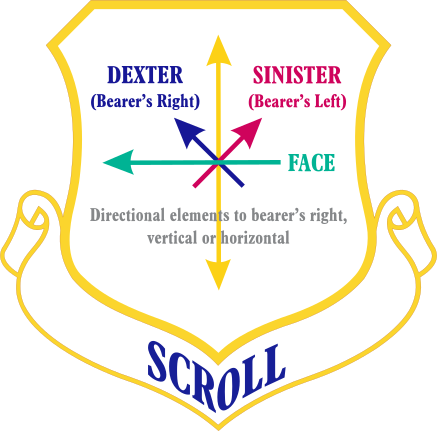
(By the Webmaster)
(By the Webmaster)
Return to Index
Disc
(Air Force Definition) Shape on which the heraldic devices, symbols, or elements of a unit emblem are displayed. The disc of today originated with a roundel, which consisted of a white five-pointed star in a blue circle, with a red disc in the center of the star. The roundel was displayed unofficially on early US Army Signal Corps airplanes, adopted officially in 1917 for airplanes, and later evolved into the national star and bar aircraft marking of today. Source: Air Force Instruction 84-105.
Disc may also have scrolls above the disc, below the disc or both. The disc became mandatory for use by US Air Force squadrons, numbered flight or equivalent organizations in 1964 for their official emblem. Prior to that year, any shape could be used.



Return to Index
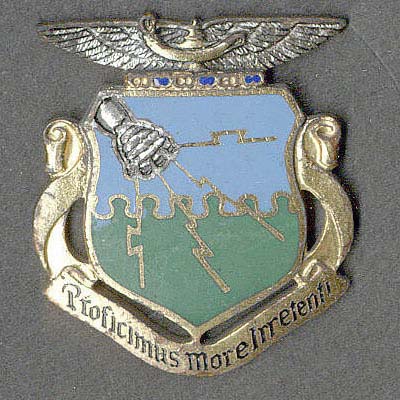
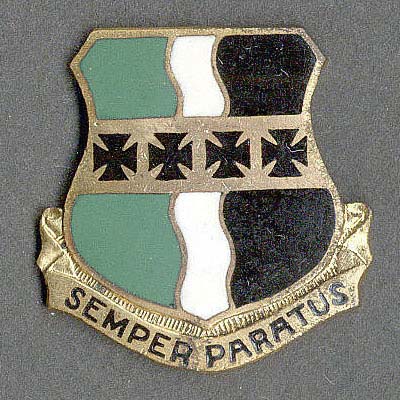
Distinctive Insignia (DI) [also Distinctive Unit Insignia (DUI)]
A metal heraldic device based on an organization’s coat of arms worn on uniforms. DIs are not used by the U.S. Air Force. However, prior to the Air Force separating from the Army in 1947, many Army Air Force organizations were authorized DIs. Many of these DIs subsequently were modified for use as the organization’s official emblem.
(Smithsonian Air and Space Museum Photo)
(Smithsonian Air and Space Museum Photo)
Return to Index
Duty Identifier Patch [also Duty Identifier, Identifier Patch]
Return to Index
Element
(Air Force Definition) In emblem design, a symbol or group of symbols, that is commonly accepted as one object or system, such as a constellation of multiple stars or formation of multiple aircraft, portraying a single characteristic, trait, or concept. Source: Air Force Instruction 84-105.
Return to Index
Emblem
(Air Force Definition) An officially approved symbolic design portraying the distinctive history, mission, and general function of an organization. It is an important, abiding element of the organization’s heritage. Source: Air Force Instruction 84-105.
Return to Index
Embroidery
The application of thread to the base material for the purpose of creating an emblematic design using one or more elements. (There are known to exist patches from several units, particular back in the 1940s, where colored beads were added to the thread, sometimes to outline and other times to completely “fill” an element and/or the field itself, but such “beaded” patches were custom-made and not at all common.)
Return to Index
Error Patch
Patch that contains a mistake, typically in spelling, size and/or thread colors. Error patches are often rejected by the ordering unit/organization, but in some cases the unit/organization used the error patches.
Return to Index
Factory Patch [also Manufacturer’s Patch]
Patch given out as promotional items by a weapons system contractor. Factory patches are often adopted by military units for wear (e.g. the F-16 Fighting Falcon “Swirl”).
Return to Index
Fake Patch [also Eye-Candy, Fake, Fantasy Patch, Novelty Patch]
A fake is a patch that was never issued or used by an organization it appears to represent. Unlike a reproduction, in which a copy of an existing patch is produce, a fake is based off an original design, artwork or decals that were never made into patches by the organization, hence the alternate term “Fantasy Patch”. Some “Souvenir” or “Novelty” patches also fall into the “Fake” category is they meet the definition above.
Return to Index
Felt
Nonwoven fabric made from wool, fur or hair matted together by heat, moisture and pressure.
Return to Index
Felt Edge
Raw or unfinished embroidery border.
Return to Index
Flag Drawing
(Air Force Definition) A blueprint of the organizational flag, with the lettering for the motto or establishment designation on the scroll. The manufacturer of the organizational flag requires a flag drawing from the organization, even if the only change is in the lettering on the scroll. Source: Air Force Instruction 84-105.
Return to Index
Full Color Patch [also Color Patch, Vivid Patch]
Patch whose color palette features the full spectrum of colors. For official patches, The Institute of Heraldry color palette is used.

Fourteenth Air Force Embroidered, Full Color Official Patch

Bangor Air Defense Sector Embroidered, Full Color Official Patch

73d Air Division Embroidered, Full Color Official Patch

96th Bomb Squadron PVC, Full Color RED FLAG 16-02 Morale Patch
Return to Index
Fully Embroidered Patch [also 100% Embroidered Patch]
Patch in which the entire surface has been completely embroidered rendering the base fabric invisible. Fully embroidered patches cost more to manufacture due to the use of additional thread. See also partially embroidered.
Return to Index
Functional Image
(Air Force Definition) Any non-heraldic design symbol locally designed and displayed. People refer to these as logos, morale or Friday patches. Source: Air Force Instruction 84-105.
Return to Index
Gaggle Patch [also Wing King/Queen Patch, Pizza Patch]
Patch which depicts multiple organizations by depicting unit emblems, weapons systems (such as specific types of aircraft) and/or other representative symbols. The term originates from a mother goose and her young, “a gaggle”. The most common Gaggle Patches are worn by Wing or Group commanders and feature the emblems of their assigned subordinate organizations. As such, the term “Wing King” or “Wing Queen” patch is often used to described this type of patch. The term “Pizza Patch” is also used because some Gaggle patches feature subordinate organization emblems arranged in a circle thus resembling pieces of pepperoni on a pizza.
Return to Index
Gauze Backing [also Cheesecloth Backing]
A backing for patches that is very thin and has the appearance of the type of material used for surgical dressings or first aid. This backing was common on many patches during the 1950s and 1960s.
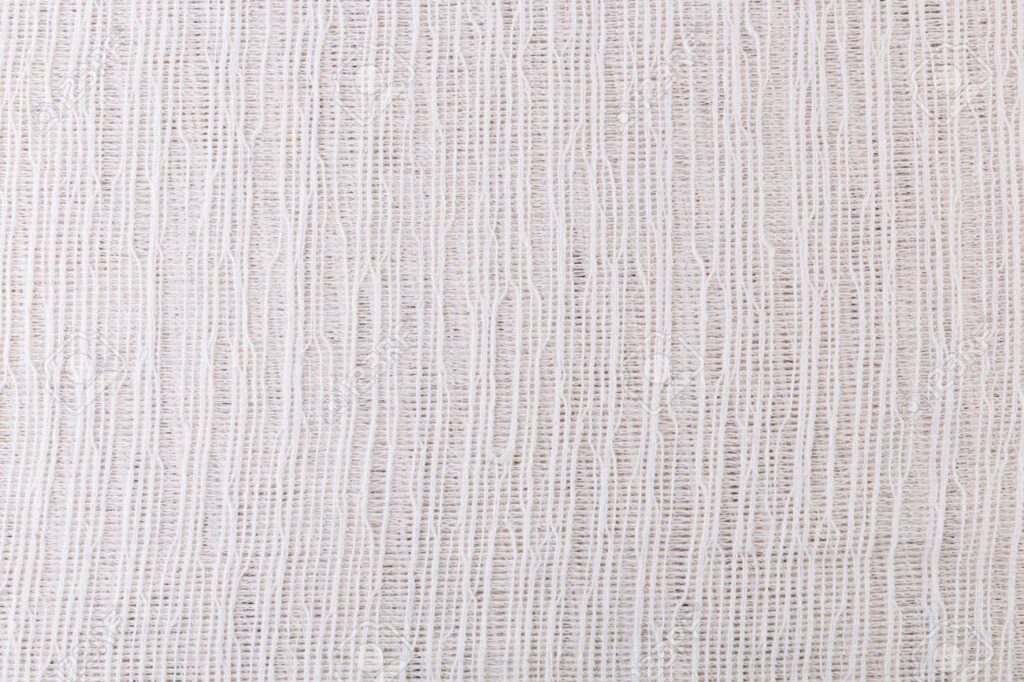
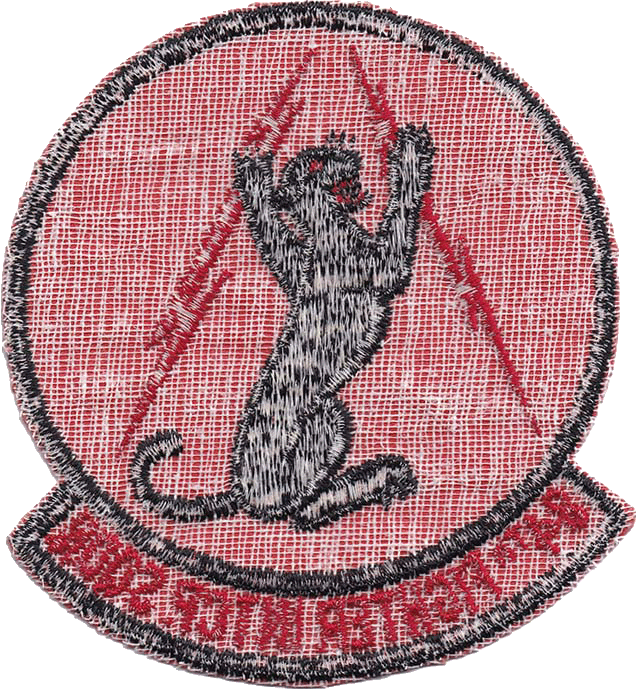
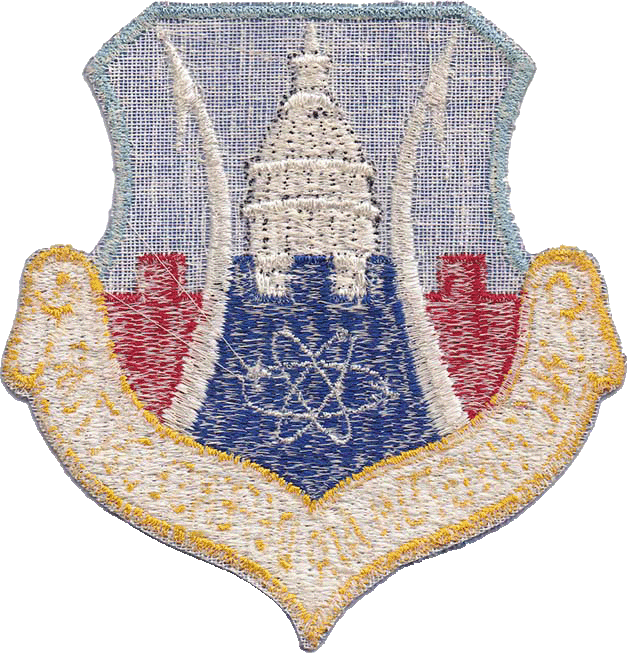
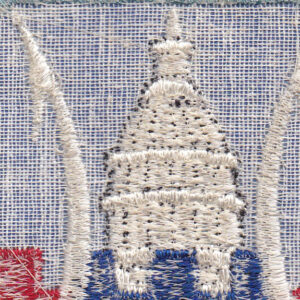
(From the Webmaster’s Collection)
Return to Index
Generic Patch
Patch used by numerous organizations.
Return to Index
Ghost Patch
Collector term for a patch that is embroidered in only one color, usually black or white, making the design very difficult to discern. Some of these actually use a different color for the merrowing or they have a normally colored scroll and inscription, but such patches are more accurately called “Quasi-Ghost.”
Return to Index
Hand-Made Patch [also Custom Patch]
Style of embroidery in which a patch is produced by an individual embroiderer using a needle and thread or a generic sewing machine. The design is transferred to cloth by punching holes in the original drawing, placing the drawing on a piece of cloth, and rubbing blue powder to transfer an outline of the design to cloth. Designs may also be drawn directly on the cloth or done freehand. Because each patch is individually embroidered, no two patches are exactly alike.
Return to Index
Hat Patch
Generally, any patch that was intended for wear on a uniform hat or cap. These include small rectangular patches bearing unit designations, and also smaller versions of approved unit emblems (generally 2.5″ or less in height or diameter).
Return to Index
Heat-Seal Backing [also Iron-On]
Special backing placed on a patch that allows it to be affixed using heat.
Return to Index
Heraldry
(Air Force Definition) The emblem in full color, motto, designation, scroll(s), and shield (of an
establishment) or disc (of a unit). Source: Air Force Instruction 84-105.
Return to Index
Heritage
(Air Force Definition) Those traditions embodied in the history, lineage, honors, and heraldry of an organization. Source: Air Force Instruction 84-105.
Return to Index
Heritage Patch
A type of morale patch and reproduction, ordered and used by an organization/unit, which features a historical design previously used by that organization/unit. World War II insignia are the most popular heritage patches, although designs from the Korean and Vietnam have been used. Many squadrons use a heritage patch in place of their normal squadron patches on Fridays or other days as designated by the commander. Heritage patches are often mistaken for reunion patches. While technically reproductions, in patch collecting circles they are considered authentic patches since they are ordered and worn by the members of a unit/organization.
Return to Index
Honors
(Air Force Definition) Official recognition documenting an organization’s participation in combat or meritorious achievement. They appear as service, campaign, Armed Forces Expeditionary, and decoration streamers affixed to the organizational flag of an establishment or to the guidon of a unit. Order flags, guidons, and streamers through official supply channels. Source: Air Force Instruction 84-105.
Return to Index
Hook and Loop Fastener [also VELCRO©, Hook and Loop Closures, Hook and Pile Fasteners, or Touch Fasteners]
A two-sided fastener consisting of hard or stiff “hooks” and soft “loops”. Hook and loop fasteners were patented by Swiss inventor George de Mestral in 1955 under the name VELCRO©. Although VELCRO© is often used generically to refer to hoop and loop fasteners, the term actually is a registered trademark referring to the company and its line of products.
Hook and loop fasteners were first used to affix name tags to flightsuits in the 1960s. In the 1970s, they came into widespread use to attach patches to flightsuits. The “hook” side is attached to typically affixed to the patch by sewing or gluing the material, although in some cases the hook side is used as the base material. The “loop” side is sewn onto clothing or other items.

Hook Side

Loop Side
Return to Index
Hours Patch [also Combat Hours Patch, Flying Hours Patch, Flying Hours Milestone Patch]
Morale patch awarded to aircrew members who have completed a specified number of flying hours. Although many variations exist, flying hour milestone patches are typically awarded in 500 and 1000 hour increments (e.g. 500, 1000, 1500, 2000, 2500 or 1000, 2000, 3000, 4000). Flying hour milestone patches are often tab patches worn above another patch (e.g. major command patch). In recent years, many major commands have created one-piece major command patches with a scroll inscribed with the number of flying hours. A variation of this type of patch is the combat hours or combat missions patch.
Return to Index
Inactivation Patch [also Deactivation Patch]
Type of morale patch produced to commemorate the inactivation of a unit. See also Death Patch, Retirement Patch.
Return to Index
Inscription
The alphabetic/numeric characters or words on an emblem or patch.
Return to Index
Launch Patch
Type of morale patch commemorating the launch of a rocket, missile or spacecraft. Launches patches are produced by the USAF organizations responsible for launch, contractors and/or program offices responsible for the program management. Besides USAF patch collectors, launch patches are also popular with collectors of space patches.
Return to Index
Leather Patch
Emblem that is printed, painted, decaled or assembled on leather. Leather patches were popular during World War II and Korea and often worn on leather flight jackets.
Return to Index
Leatherette Patch
Term occasionally used to describe the backing upon which emblems are embroidered that are intended for wear on the modern A-2 jacket, though it is actually vinyl. Also, this term was used to describe “patches” made during the 1950s and 1960s whose construction consisted of a screened emblem or a decal that was applied to a cardboard-like material with a peel-and-stick backing that was intended for attachment to flight jackets (these emblems would never have endured the launderings a flight suit or uniform shirt experiences). The most commonly observed patches of this sort are from the 4082d Strategic Wing and the North East Air Command (NEAC).
Return to Index
Lineage
(Air Force Definition) The unique, official, traceable record of organizational actions peculiar to each USAF and USSF organization and to no other organization. Source: Air Force Instruction 84-105.
Return to Index
Lineage & Honors (L&H) History
(Air Force Definition) A statement that identifies the lineage, accrued honors, assignments, stations, and emblem of an organization. It may include a list of commanders and a list of aircraft, missiles, or both. If the organization is an establishment, the lineage and honors history may also identify component organizations. Lineage and honors histories for combat or support organizations that participated in significant USAF or USSF operations may also contain narrative summaries of operations. Source: Air Force Instruction 84-105.
Please see the lineage and honors page for further information.
Return to Index
Loom
A machine for weaving together threads of various colors to form a patch. The most popular of these were manufactured by Schiffli, and the patches they produced are often referred to as Swiss Embroidery. The principal advantage of loom-made patches was that large numbers could be made relatively inexpensively, since each run of a large Schiffli loom could produce a hundred patches. After setup, a typical order of 1,000 patches could be made in little more than an hour.
Return to Index
Merrowed Edge (ME) [also Overedge Stitch, Overlock Stitch, Rolled Edge]
A patch having a protective “molding” of thread all around its edge, often referred to as a “rolled edge” because of its appearance, the original purpose of which was to prevent raveling. Merrowing is an overedge stitch added using a special machine. On loom-made patches, this is performed after a patch has been embroidered and cut; on multihead-made patches, it’s done to the pre-made twill “blanks” before they are embroidered. The telltale sign of merrowing is the “pigtail” end that is usually either glued or taped to the back of the patch. Merrowing machines are named after their inventor, Joseph M. Merrow. Although a few patches with merrowing from the 1940s and 1950s have been observed, merrowing of military patches didn’t emerge until the 1960s, didn’t really “catch on” until the 1970s, and didn’t become widespread until the 1980s. Merrowing now seems to be the industry standard, though quite a few are still unmerrowed. It should be noted that because twill doesn’t ravel and is often treated, cut-edge patches really don’t need merrowing, so nowadays it’s usually added because the designer thinks it enhances the looks of the patch.
Return to Index
Missions Patch or Combat Missions Patch [Type of Morale Patch]
Morale patch worn by aircrew, missileers, space operators and other specialities indicating the number of missions, sorties or alerts they have completed. These patches are often formally awarded to the member. Combat mission patches indicate those missions were completed in a combat zone. One of the most famous combat missions patch is the one designed in 1965 by Capts. Bruce Holmes and Will Koenitzer, two F-105 pilots in the 469th Tactical Fighter Squadron. The design of the “North Vietnam 100 missions F-105” patch has served as the basis for many combat mission patches. Visit the National Museum of the US Air Force for more information on this patch.

Vietnam Era 100 Missions Over North Vietnam in the F-4 Phantom II Combat Mission Patch

Vietnam Era 202 Missions Over Southeast Asia in the F-4 Phantom II Combat Mission Patch

341st Strategic Missile Wing 100 Alerts (Missions) Patch

3d Space Operations Squadron 250+ Error Free Sorties Patch
Return to Index
Morale Patch [also Friday Patch]
Any unofficial patch used by an organization. Morale patches may be, but are not necessarily, an approved patch. The patches are intended to raise the “morale” of the organization, thus the origins of the term. Morale patches are also referred to as “Friday Patches” as it has become customary for organizations to allow personnel to wear any patch in good taste (although this is commonly violated) on Fridays. Morale patches are generally worn on the left sleeve of the flight suit or Operational Camouflage Pattern (OCP) uniform. Morale Patches includes, but is not limited to, the following sub-categories:
- Anniversary Patches
- Class Patches
- Combat Hours/Combat Missions Patches
- Deployment Patches
- Exercise Patches
- Gaggles
- Heritage Patches
- Inactivation Patches
- Launch Patches
- Retirement Patches
- Temporary Duty Patches
Return to Index
Motto
(Air Force Definition) A motto expresses in a word or short phrase the organization’s goals, ideals, or principles. Part of the heraldry of an organization. Source: Air Force Instruction 84-105.
Return to Index
Nipped
A patch with visible moth damage, usually one or more holes of varying sizes, but could also include, or might be limited to, munching done at the edge (technically, not holes).
Return to Index
No-Glo
This term describes a patch that does not fluoresce when illuminated by an ultraviolet light (i.e., blacklight). More recent patches tend to be constructed of synthetic fibers which will “glow” when exposed, whereas patches made before the introduction of synthetics generally do not glow. The one exception is when an older patch has been washed with a detergent, which tends to leave a residue that appears to glow.
Return to Index
New Old Stock (NOS)
Term created to describe both the condition and the age of an item simultaneously (i.e., an older patch that is unused and in like-new condition).
Return to Index
Official Emblem
A USAF or USSF emblem that has been approved by the appropriate authority (currently the Air Force Historical Research Agency (AFHRA) or the Air National Guard History Office) and registered with The Institute of Heraldry. Per Air Force Instruction 84-105, “an active organization has exclusive use of its currently approved heraldic emblem. AFHRA is responsible for controlling the use of all other emblems.” Title 18 United States Code (USC) Section 704, Military Medals or Decorations and Title 32, Code of Federal Regulations, Part 507, Manufacture and Sale of Decorations, Medals, Badges, Insignia, Commercial Use of Heraldic Designs and Heraldic Quality Control Program, current edition, protect images of all organizational emblems.
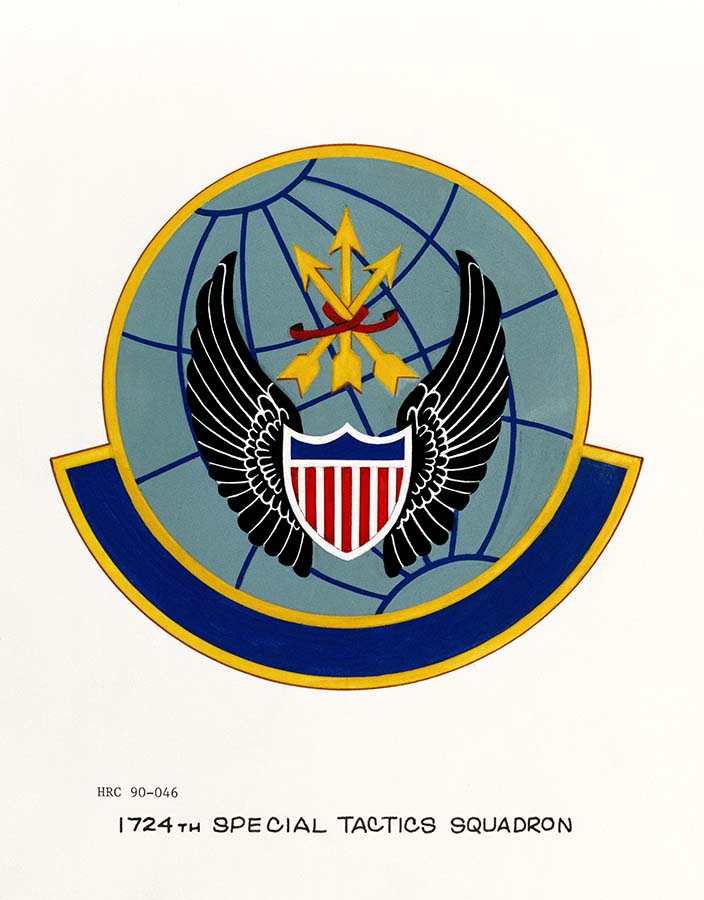
(Courtesy of the National Archives)
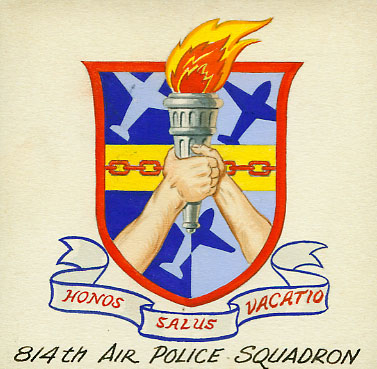
(Courtesy of the Air Force Historical Agency)
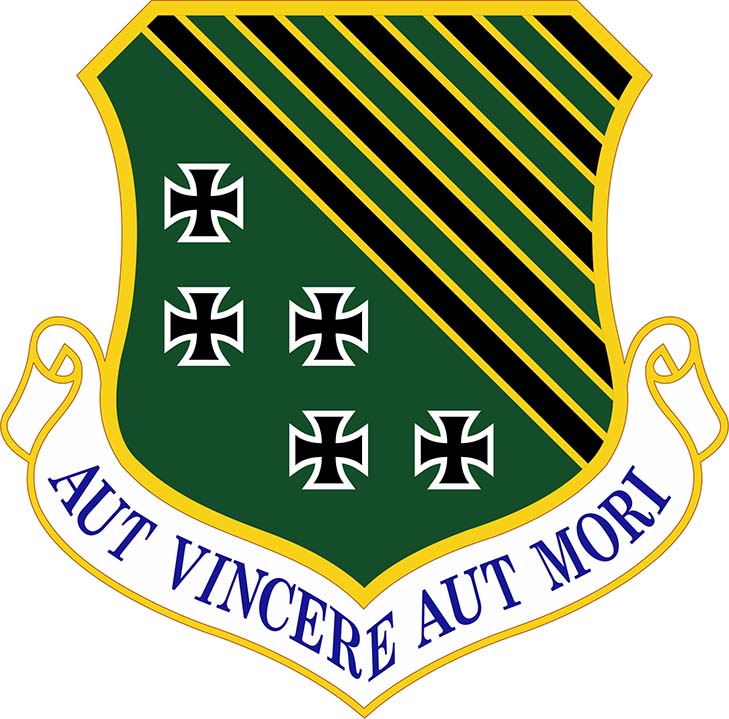
(Courtesy of the Air Force Historical Agency)
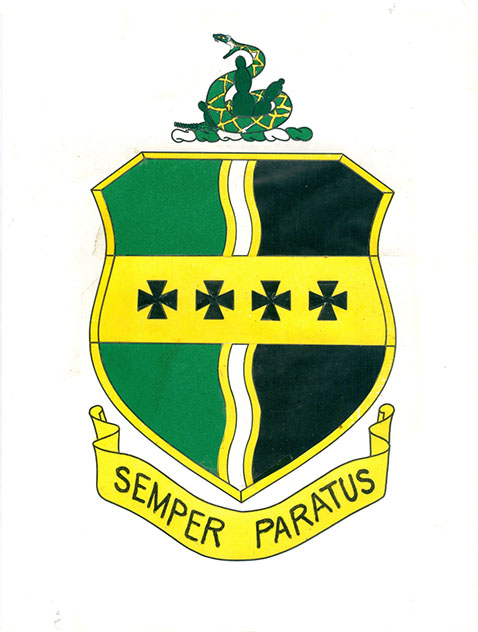
(Courtesy of the Air Force Historical Agency)
Return to Index
Official Patch
A patch made based on the organization’s official emblem.
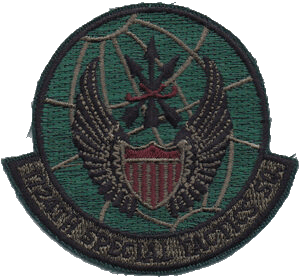
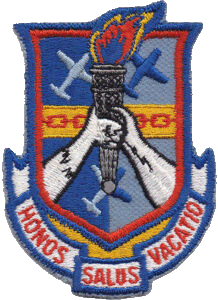
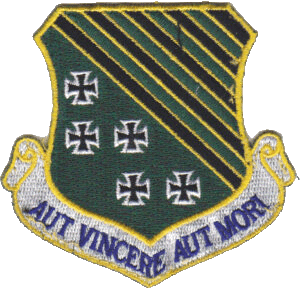
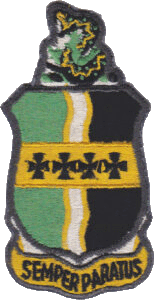
(From the Webmaster’s Collection)
Return to Index
Operation ENDURING FREEDOM Camouflage Pattern (OEF-CP) or Multicam Subdued
A subdued color palette used to convert full color patches for wear on the Operation ENDURING FREEDOM Camouflage Pattern (OEF-CP) Uniform first worn by the US Army and adopted by the US Air Force for wear on September 29, 2010. The palette consists of four colors (see table below). The OEF-CP subdued color palette was replaced by the Operational Camouflage Pattern (OCP) or Spice Brown subdued palette when the OCP uniform became the US Air Force’s primary utility uniform in October 2018. The OCP subdued color palette differs by one color from the OEF-CP subdued color palette; spice brown was used instead of khaki.
| Color | Yarn | Textile | Pantone Matching System (PMS) | Hex |
|---|---|---|---|---|
| Black | 67138 | 65018 | N/A | 000000 |
| Bagby Green | 67204 | 80089 | 399 | A19200 |
| Olive Drab | 67133 | 66021 | 455 | 695A24 |
| Khaki | 67193 | 80162 | 542 | B2A77E |
Return to Index
Spice Brown Color Criteria [also Spice Brown Color Scheme, Spice Brown Subdued, Operational Camouflage Pattern (OCP) Subdued]
A subdued color palette used to convert full color patches for wear on the Operational Camouflage Pattern (OCP) Uniform adopted by the US Air Force in 2018. OCPs replaced the Airman Battle Uniform (ABU) as the standard utility uniform for the US Air Force and the Operation ENDURING FREEDOM Camouflage Pattern (OEF-CP) Uniform (also know as Multi-Cams) used while deployed to Southwest Asia and Afghanistan. The palette was formally introduced on 20 September 2018 and consisted of four colors (see table below). The OCP subdued color palette differs by one color from the OEF-CP subdued color palette; spice brown was used instead of khaki.
| Color | Yarn | Textile | Pantone Matching System (PMS) | Hex |
|---|---|---|---|---|
| Black | 67138 | 65018 | N/A | 000000 |
| Bagby Green | 67204 | 80089 | 399 | A19200 |
| Olive Drab | 67133 | 66021 | 455 | 695A24 |
| Spice Brown | 67196 | 80129 | 168 | 75391C |
Return to Index
Overruns [also Manufacturer’s Overruns]
Extra patches produced above and beyond a customer’s original order. Overruns are made in anticipation of a re-order from the customer or for resale on the collector’s market. Overruns are considered authentic patches by the vast majority of collectors if they originated from the original manufacturer and are 100 percent identical (and thus indistinguishable) from the customer’s original order. A large number of patches available on the resale market are actually overruns.
Return to Index
Painted Patches
Patches, almost always using leather for the base material, upon which the elements have been depicted by painting them on. These were quite popular and fairly common during World War II, especially in flying units. Because high-tech methods are about the only way to determine the vintage, and therefore the authenticity, of such patches, these are frequently reproduced.
Return to Index
Patch
(Air Force Definition) A term used to refer to the cloth depiction of a design that can be affixed to a uniform. Source: Air Force Instruction 84-105.
While the Air Force definition only mentions “cloth”, it is generally accepted that a patch can be made of other materials to include leather, rubber or Polyvinyl Chloride (PVC).
The term “patch” is often used incorrectly to refer to an “emblem“.
Return to Index
Patch King (Patch Manufacturer and Reseller)
American Patch Manufacturer and Reseller. Patch King was an embroidery company founded during World War II in New York City, New York by entrepreneur Sol Marks. After World War II, Marks anticipated demand for military patches and dispatched buyers around the world to purchase surplus stocks. After amassing a large stock, Patch King resold the patches to collectors and veterans worldwide primarily through a print catalog. While many of the patches sold immediately after World War II were authentic patches, Patch King also commissioned reproduction patches of World War I and other patches. Patch King apparently closed its doors sometimes in the late 1980s/early 1990s. Sources: “King of Patches”, Colliers Magazine, January 24, 1948.
Return to Index
Partially Embroidered [also Embroidered on Twill]
Patch in which parts of the base fabric is visible because only parts of its surface has been embroidered. Partially embroidery costs less to manufacture than fully embroidered patches and are thus a popular way to save on production cost. Partially embroidered patches are referred to as “Embroidered on Twill”, however the term is incorrect as technically, fully embroidered patches are embroidered on twill as well. Additionally, the base material used is not always twill.
Return to Index
Pencil Pocket Patch
Type of morale patch designed to be affixed to the hook and loop fastener located on the left sleeve of a flightsuit. The pencil pocket flap is often removed from the flightsuit thus allowing patches to be attached.
Return to Index
Pigtail
Piece of thread on a merrowed edge that extends beyond the patch. Pigtails are often taped or sealed to the back of a patch.
Return to Index
Plastic Backing
Plastic added to the back of a patch which prevents fraying of threads and provides rigidity to the patch.
Return to Index
Pocket Patch
Any patch intended for wear on a uniform pocket, though in practice these were/are worn above the pocket also. Does not include square or rectangular patches containing only a unit designation, as these were intended for wear only above the pocket (like a name tape) or on headgear. Because of their equivalent sizes, Shoulder Sleeve Insignia are properly considered pocket patches by most patch collectors.
Return to Index
Polyvinyl Chloride (PVC) Patch
A type of patch made with flexible Polyvinyl Chloride (PVC), a thermoplastic polymer. PVC patches are sometimes called “rubber patches” even though they are different materials. There are two types of PVC patch: “2D” or “3D”. A 2D PVC patch is flat across the surface of the patch. A 3D PVC patch has raised, curved surfaces. When compared to embroidered patches, PVC patches are considered more durable and weather-resistant. PVC patches can only be made in solid colors so they cannot reproduce color gradients like embroidered patches. Additionally, PVC lack the “depth” of an embroidered patch. For the US Air Force, PVC patches started appearing on a wide scale basis in the mid-2010s although they have been around for a longer period of time.
Return to Index
Previous Issue
A patch that was previously issued and worn by member(s) of an organization.
Return to Index
Puff Embroidery
Stitching over embroidery/craft foam to create a three-dimensional effect.
Return to Index
Reject (also Rejected Patch)
Patches that were ordered by a customer but were refused and/or returned to the manufacturer. Patches are rejected for a multitude of reasons including errors or issues with quality. However, not all error patches are rejects since some units will retain error patches for use. When patches are returned to the manufacturer, they are often dumped onto the resale market in order to recoup losses. In patch collecting, a reject carries little to no value.
Return to Index
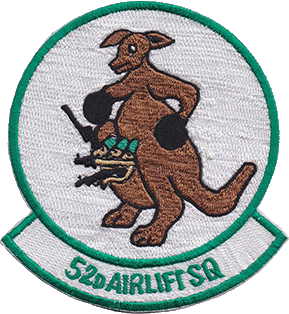
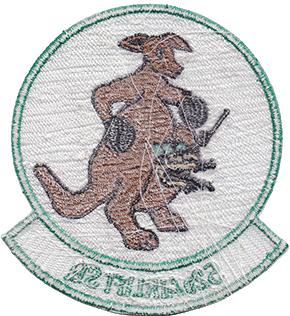
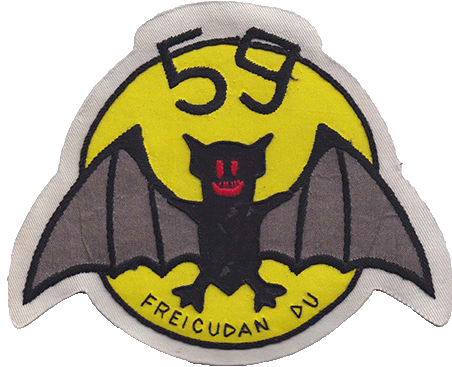
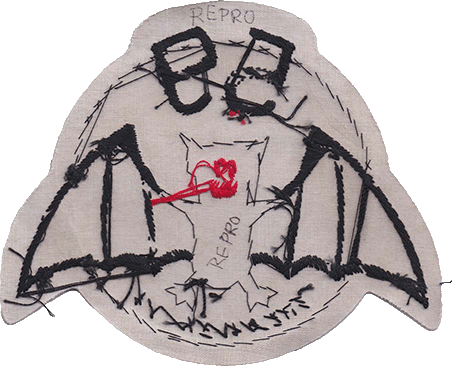
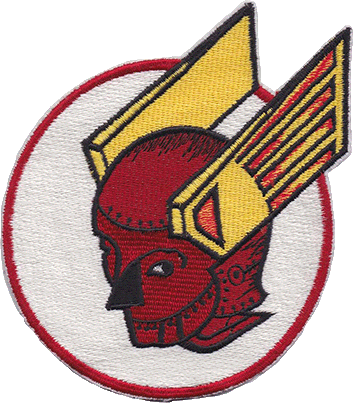
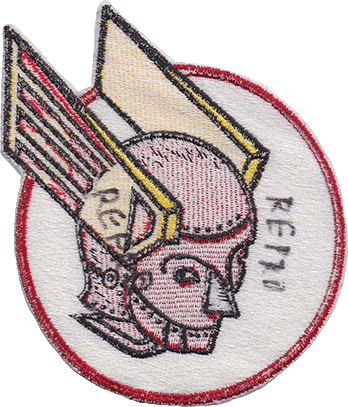
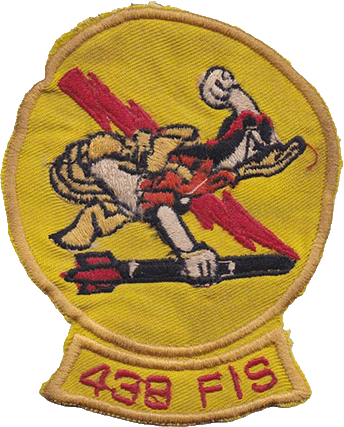
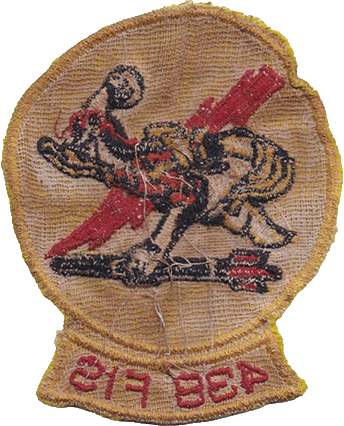
Reproduction [also Knock-Offs, Repro, Replicas]
An unauthorized copy or close imitation of an authentic patch.
(From the Webmaster’s Collection)
Return to Index
Retirement Patch
Type of morale patch produced to commemorate the retirement of a system/weapon system. See also Death Patch.
Return to Index
Reunion Patch [also Reunion Piece]
A type of reproduction ordered by individual veterans or unit alumni which features an emblem of their respective unit/organization. Reunion patches are made because original patches are cost prohibitive and often difficult, if not impossible, to locate. While reproductions, many collectors group these patches separately since they are ordered by former members of a unit/organization. Reunion patches can usually be easily identified from the original by the style of embroidery. For pricing purposes however, reunion patches are treated as reproductions. Reunion patches are often confused with heritage patches but they are two separate and distinct categories of patches.
Return to Index
Sample Patch [also Manufacturer’s Sample, Prototype Patch, Sample]
Pre-production patch used by a manufacturer to obtain customer approval for full-scale production. Samples are sometimes one or few-of-a-kind since a customer will direct changes prior to full-scale production.
Return to Index
Screenprinted Patch [also Screened Patch, Silk-Screened Patch]
Screenprinting is a technique using a stencil on a silk, nylon or organdy screen. Paint is applied to the screen and penetrates areas of the screen not blocked by the stencil. Several stencils are used to achieve multiple colors.
Return to Index
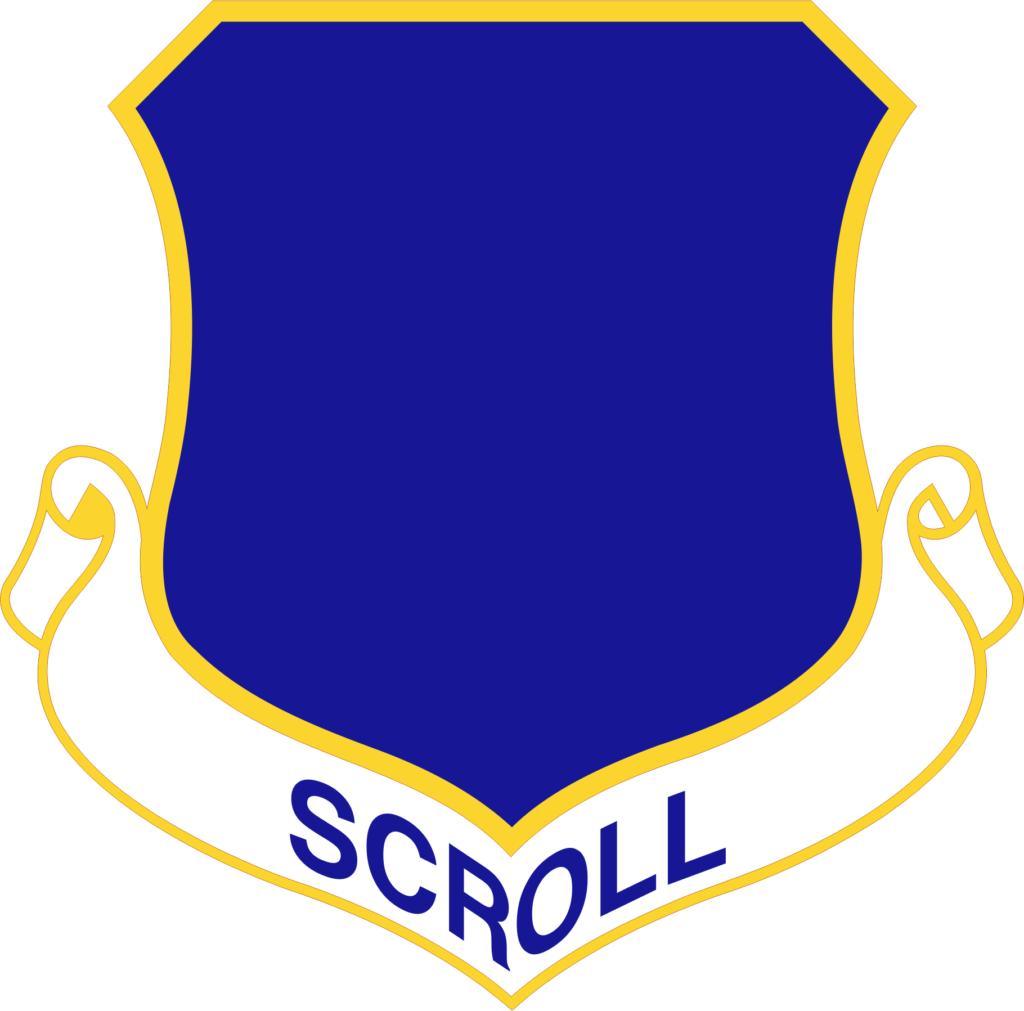
Scroll [also Rocker]
A ribbon, often with rolled ends, used to inscribe a motto, unit designation or other information. In patches, scrolls are often found attached to discs and shields.
Return to Index
Selvedged
Similar to merrowing in both appearance and purpose, but this edge finishing is performed with a sort of cross-stitch (very much like a button-hole stitch) rather than by using a merrowing machine, so there is no pigtail remnant and the edging lacks the look of merrowing.
Return to Index
Shield
(Air Force Definition) Shape on which the heraldic devices, symbols, or elements of an establishment’s emblem are displayed. This shape derives from the shield of the Air Force Seal the Department of the Air Force adopted in 1947. The Air Force requires establishments to use this type shield to display their distinctive emblems on organizational flags and emblems. Patches for uniforms using this shield shape were phased in during late 1940s and early 1950s as the US Army Air Forces shield was phased out. Source: Air Force Instruction 84-105.
Return to Index
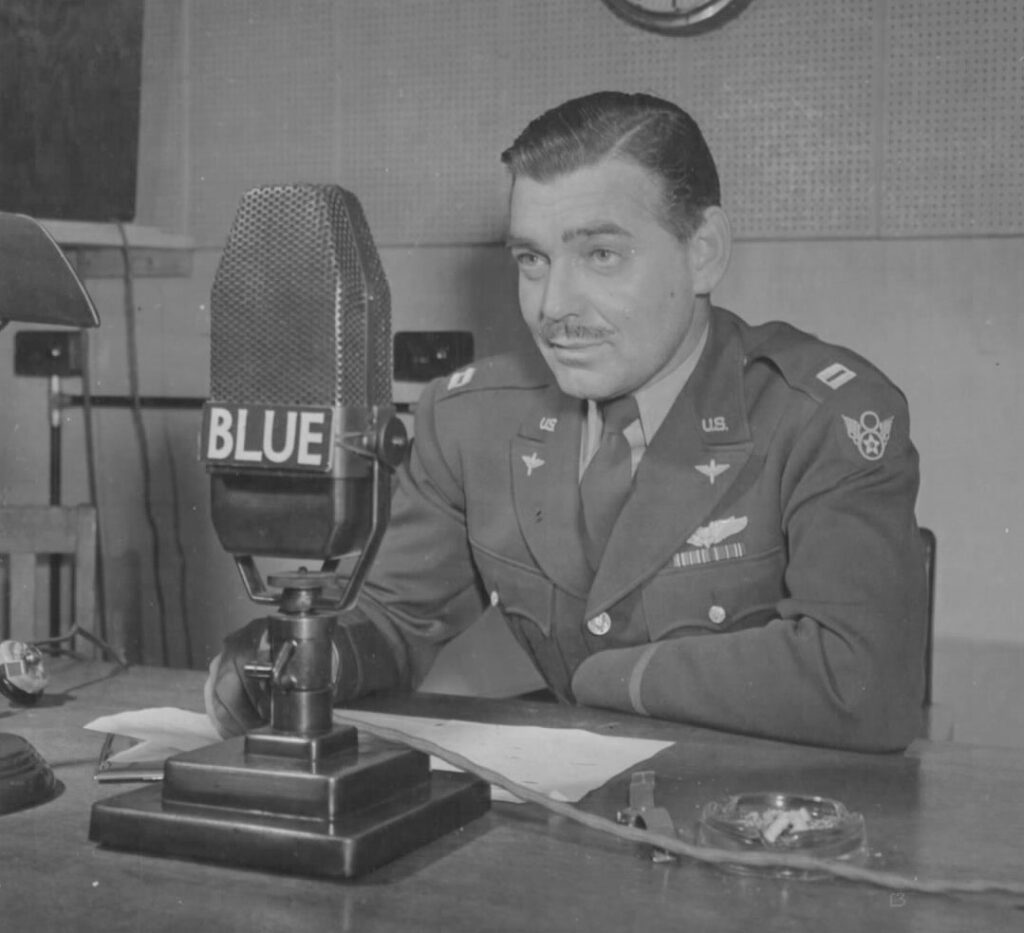
Shoulder Sleeve Insignia (SSI)
Patches intended for wear on the upper portion of the uniform sleeve, near the shoulder seam, generally used in reference to U.S. Army patches. The term also applies to United States Army Air Forces or Air Corps insignia, such as the Army Air Forces patch and World War II Numbered Air Force patches.
(US Army Air Forces Photo via the National Archives)
Return to Index
Sinister
The left hand side of the shield from the standpoint of the person behind it. Source: Guide to Air Force Heraldry.
(By the Webmaster)
(By the Webmaster)
Return to Index
Soiled
A patch that has not only lost any original luster or sheen it may have once had, but which also has visible dirt, grime, or skin oil accumulation or contamination on its surface.
Return to Index
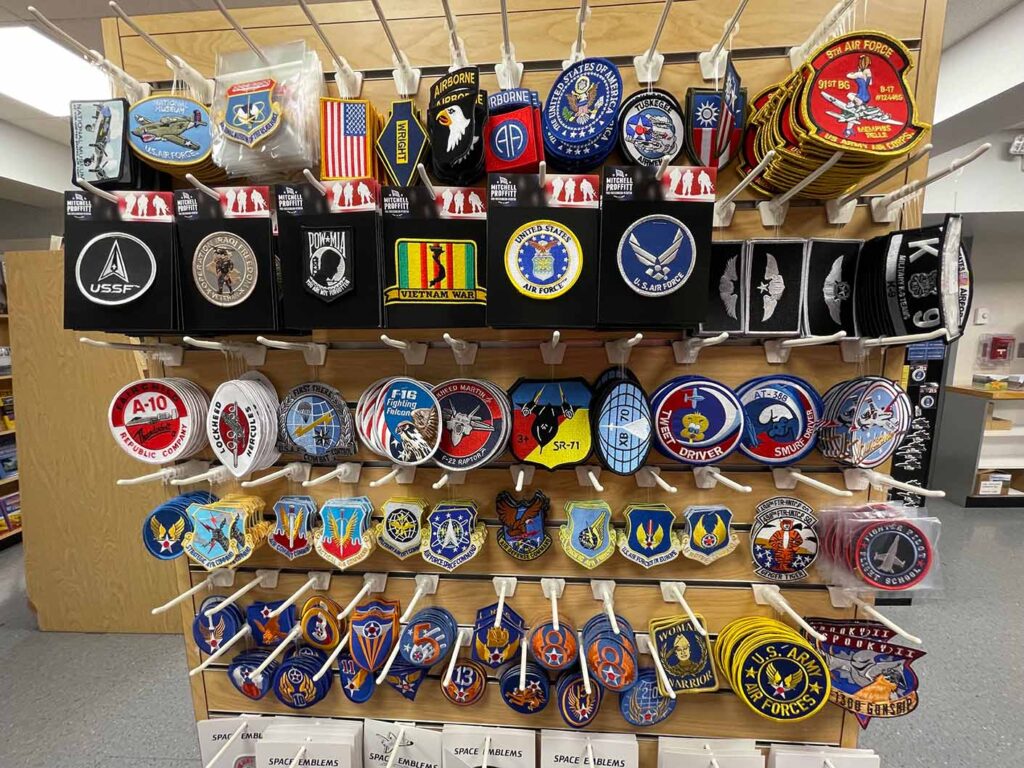
Souvenir Patch (also “Novelty Patch”)
Type of reproduction or fake patch, sold by an organization, often with a connection or association the military, that is intended as a keepsake or memento for visitors. Souvenir patches are not intended to be sold as “authentic” patches. Proceeds from the sale of souvenir patches are typically used to fund that organization. For example, the National Museum of the US Air Force Gift Shop, run by the non-profit Air Force Museum Foundation, Inc., sells souvenir patches which help fund the Museum.
(Photo taken by the Webmaster)
Return to Index
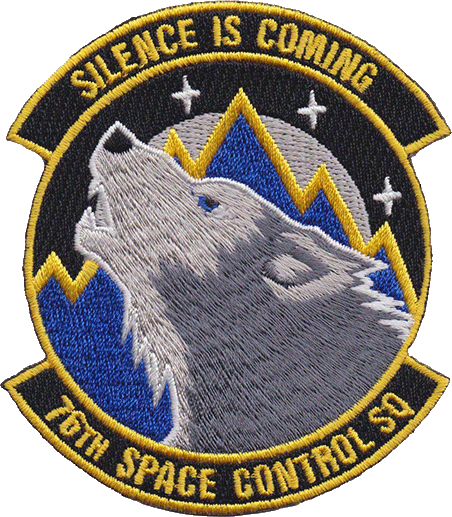
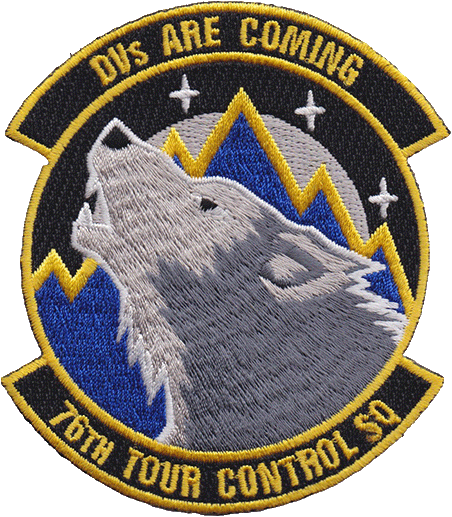
Spoof Patch
A patch that, at first glance, very closely resembles another patch, but has been slightly modified for the purpose of making fun of the original or what it represents. This modification can be to the inscription or changes to the actual design. A spoof patch differs from a doctored patch in that doctored patches are changed after production, whereas spoofs are manufactured that way.
(From the Webmaster’s Collection)
(From the Webmaster’s Collection)
Return to Index
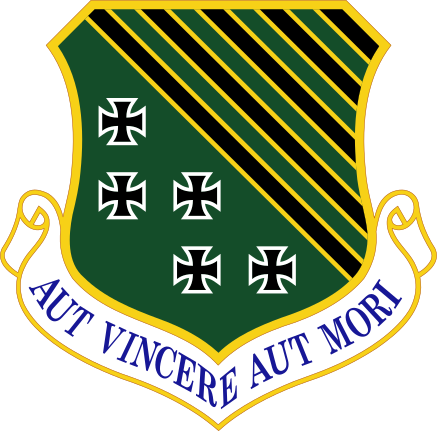
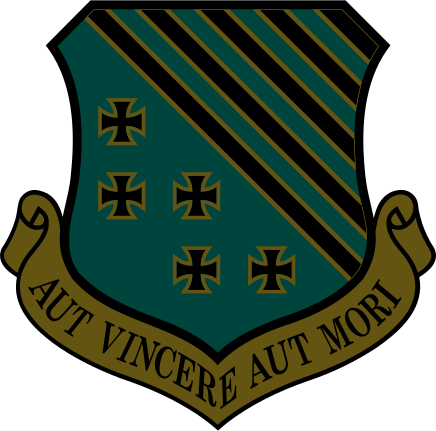
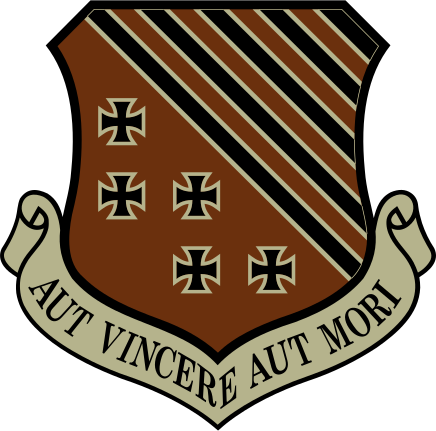
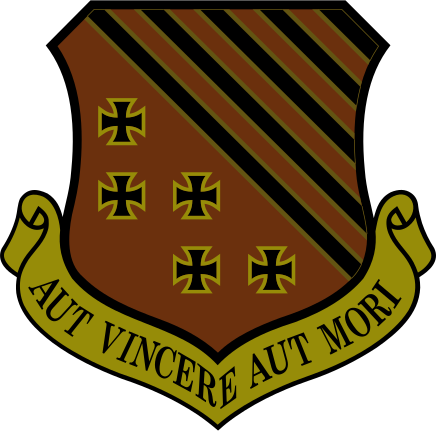
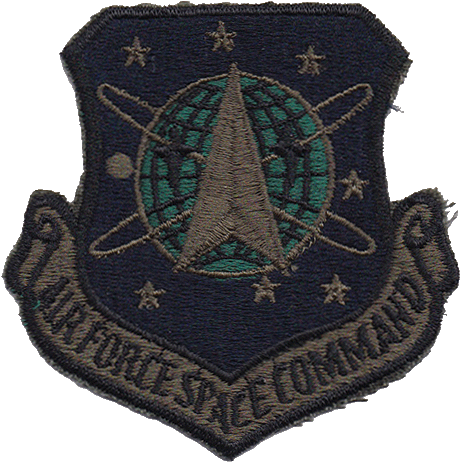
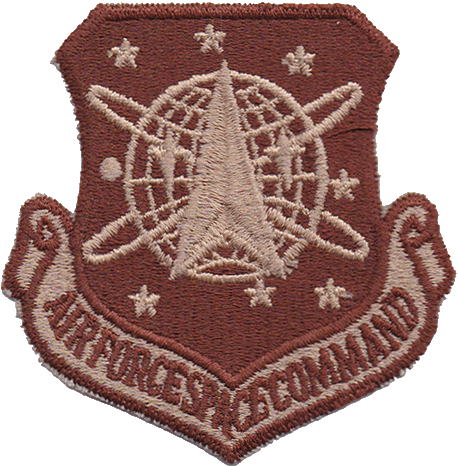
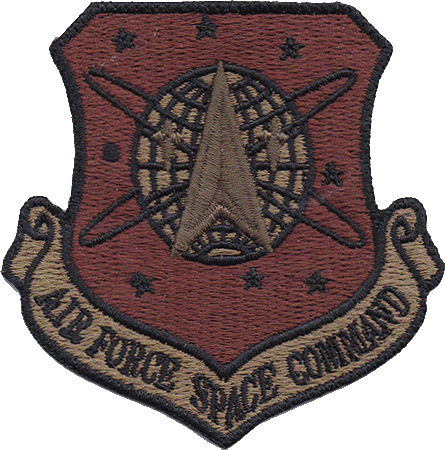
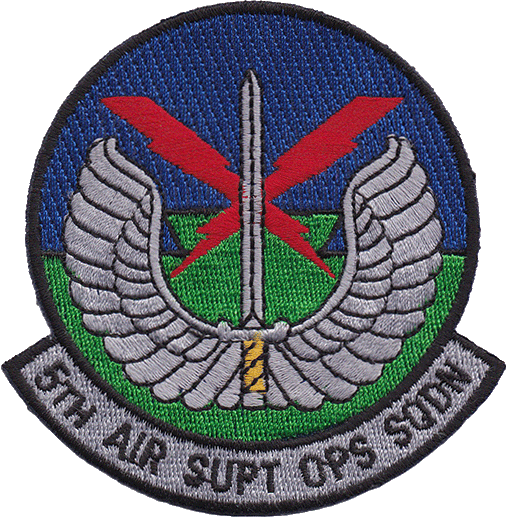
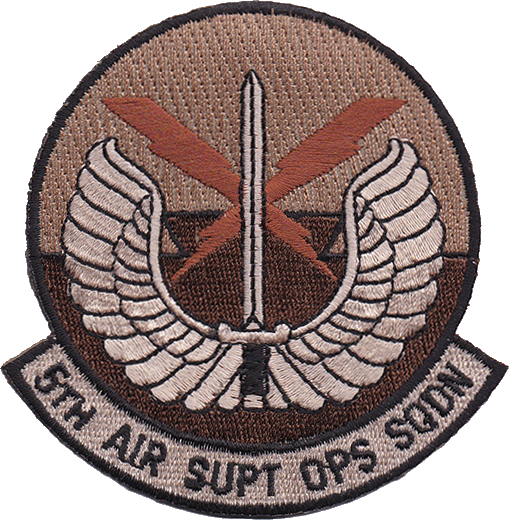
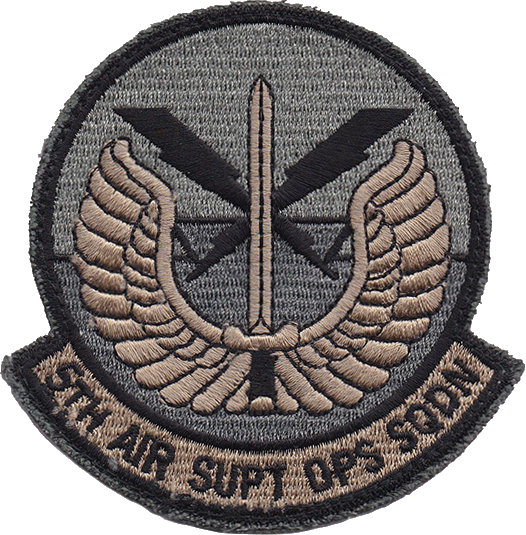
Subdued [also Muted or Camouflaged]
(Air Force Definition) A term used to describe a patch converted to colors officially prescribed by the AF Uniform Office. Examples include operational camouflage pattern, woodland and desert. Source: Air Force Instruction 84-105.
A color palette that is used to convert a full color emblem or patch to a color scheme that more closely matches a uniform’s color and camouflage scheme. The full color palette is “toned down”, thus the term “subdued” is use. While “subdued” originally referred to the Woodland Subdued color palette, the addition of additional subdued palettes have necessitated further differentiation. The US Air Force uses or has used the following subduing schemes:
- Woodland Subdued (Forest Subdued)
- Desert Subdued
- Airman Battle Uniform Subdued
- Operation ENDURING FREEDOM Camoflague Pattern (OEF-CP) Subdued (Multi-cam Subdued)
- Operational Camouflage Pattern Subdued (Spice Brown Subdued)
(The Institute of Heraldry artwork)
(The Institute of Heraldry artwork)
(The Institute of Heraldry artwork)
(The Institute of Heraldry artwork)

(From the Webmaster’s Collection)
(From the Webmaster’s Collection)
(From the Webmaster’s Collection)
(From the Webmaster’s Collection)
(From the Webmaster’s Collection)
(From the Webmaster’s Collection)
(From the Webmaster’s Collection)
Return to Index
Swiss Embroidery [also Schiffli Embroidery]
Style of embroidery involving a paper tape, punched like the roll for a player piano, that is mechanically “read” by a machine that directs hundreds of needles on a loom simultaneously. The process begins with a sketch of the patch, enlarged to six times the size of the finished product, with every other stitch actually drawn in by hand. The operator traces every indicated stitch line with a metal stylus, creating a paper template for the loom. During the sewing, a different color of thread is used on each “pass” and this, in effect, layers one color on top of another, creating a bas-relief effect, as opposed to the uniformly flat surface of a Multi-Head patch. Two or three layers is fairly common, but attempting to penetrate too many layers tends to break needles, so rarely are more than four or five observed. The perception of depth from the raised layers of color, and the effects of highlighting and shadowing that occurred naturally when light hits the patch from various angles, tends to make some of these patches with more elaborate designs true works of art. This type of patch embroidery had its genesis in Switzerland, hence the term “Swiss embroidery,” but the process was imported into the United States and was firmly established in the northern New Jersey area by the outbreak of World War II. Swiss embroidered emblems are often referred to as Schiffli patches because they are made on Schiffli looms. These looms use a shuttle that resembles the shape of a sailboat’s hull, and “Schiffli” means “little boat” in the Swiss dialect of the German language.
Return to Index
Tab Patch [also Arc]
A indistinguishable patch typically worn above or below another patch. Tab patches are usually constructed in a manner that allows them to fit along the edge of the other patch and typically consists only of an inscription indicating a specialty, qualification or flight/crew hours.
Return to Index
Temporary Duty (TDY) Patch
Type of morale patch produced by units/organizations for temporary duty (TDY) assignments. See also Deployment Patch.
Return to Index
Theater Made Patch (also Theater Made, Theater Make or Theater Make Patch)
Patch made by a local vendor located near or on overseas bases. Theater patches are typically, but not always, hand-made in limited quantities (since the 90’s many local vendors have switched to computer embroidery machines). Frequently, theater-made patches are specified by country or region Some of the more common countries for theater-made patches include Afghanistan, Iraq, Japan, Korea, Philippines, Qatar, Saudi Arabia, Thailand, Turkey and Vietnam. Theater-made patches are usually more sought after by collectors due to their limited numbers.
Return to Index
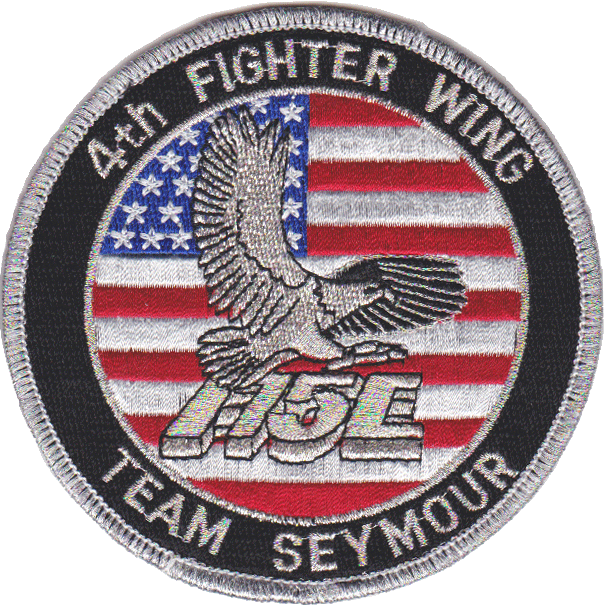
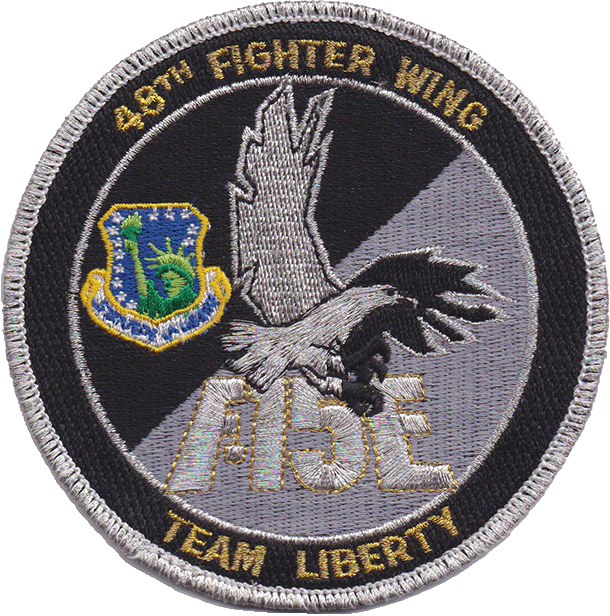
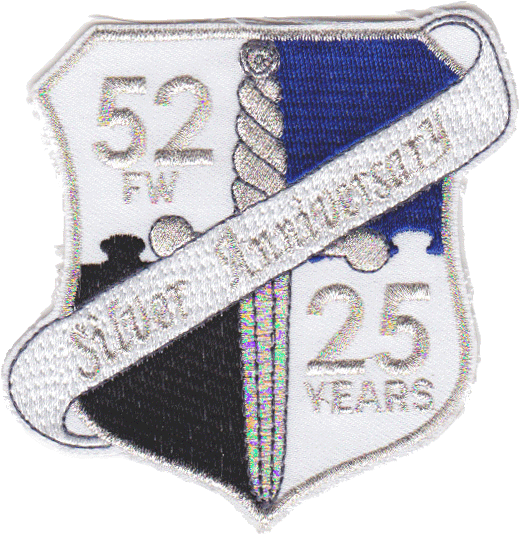
Tinsel
Metallic-looking polyester thread, known as Mylar, that has the appearance of either silver or gold. Mylar should not be, but often is, confused with bullion thread.
(From the Webmaster’s Collection)
(From the Webmaster’s Collection)
(From the Webmaster’s Collection)
Return to Index
The Institute of Heraldry (TIOH) US Air Force Emblem Color Palette
The Institute of Heraldry’s (TIOH) color palette is a selection of 40 standardized colors that are used when TIOH creates the renderings for the USAF’s official emblems. Every color in the TIOH’s color palette has a corresponding thread number which allows manufacturers to use the correct color when producing a patch based on an organization’s official emblem. The following table lists all the colors in TIOH palette:
| Color | Yarn | Textile | Epoxy Chip | Pantone Matching System (PMS) | Hex | Federal Standard |
|---|---|---|---|---|---|---|
| Black | 67138 | 65018 | 26 | N/A | 000000 | 17038 |
| Smoke | 67201 | 80099 | N/A | 425 | 53575A | 16081 |
| Silver Gray | 67137 | 65008 | 27 | 422 | 9EA1A2 | 16492 |
| White | 67101 | 65005 | 28 | N/A | FFFFFF | 17925 |
| Air Force Yellow | 67103 | 65023 | 8 | 116 | FFCD00 | 13655 |
| Yellow | 67108 | 65002 | 31 | 136 | FFBF3C | 13538 |
| Golden Orange | 67109 | 65003 | N/A | 1375 | FF9E18 | 12300 |
| Orange | 67110 | 65004 | 7 | 1665 | FF4D00 | 12246 |
| Marine Corps Scarlet | 67154 | No Number | N/A | 185 | EA0029 | 11302 |
| Scarlet | 67111 | 65006 | 1 | 200 | C10230 | 11350 |
| Crimson | 67112 | 65006 | 4 (Transparent) | 220 | Unknown (A50050) | – |
| Brick Red | 67113 | 65020 | 3 | 202 | 8A2432 | 11136 |
| Garnet | 67158 | 80083 | 3 | 209 | Unknown (6F263D) | – |
| Maroon | 67114 | 65017 | 6 | 504 | 572A31 | 10049 |
| Purple | 67115 | 65009 | 22 & 23 (Transparent) | 267 | 60269E | – |
| Brittany | 67119 | 80130 | 34 | 551 | A2C5D3 | 15526 |
| Bluebird | 67117 | 65026 | 33 | 542 | 7BADD3 | 15092 |
| Oriental Blue | 67172 | 65027 | 30 | 285 | 0071CE | 15182 |
| Light Blue | 67120 | 65014 | 34 | 5415 | Unknown (5B7F95) | 15177 |
| Ultramarine | 67118 | 65010 | 18 | Reflex | 001689 | – |
| Cobalt Blue | 67122 | 65011 | 20 | 281 | 00205C | 15050 |
| Flag Blue | 67124 | 80077 | N/A | 282 | 011E41 | 15048 |
| Old Glory | 67178 | 80075 | N/A | 280 | 002169 | 15056 |
| Grotto Blue | 67165 | 80022 | N/A | 3115 | Unknown (00C1D4) | – |
| Teal | 67121 | 65024 | 15 & 16 (STB Only) | 3035 | 003E52 | – |
| Mosstone | 67127 | 65022 | N/A | 377 | Unknown (7A9A01) | – |
| Emerald | 67128 | 80063 | N/A | 369 | 61A60E | – |
| Irish | 67189 | 80120 | N/A | 348 | 00843E | 14120 |
| Green | 67129 | 65007 | 12 | 357 | 1A5632 | 14110 |
| Spruce Green | 67130 | 80066 | 11 (Transparent) | 3302 | 004C45 | 14066 |
| Bottle Green | 67191 | 65025 | 12 | 343 | 095540 | 14109 |
| Army Green | 67131 | 66034 | 16 | 553 | 294634 | 14036 |
| Olive Drab | 67133 | 66021 | 9 | 455 | 695A24 | – |
| Natural | 67192 | 80008 | 35 | 454 | CCC4A7 | – |
| Khaki | 67193 | 80162 | N/A | 542 | B2A77E | 13522 |
| Buff | 67135 | 65015 | 24 | 465 | BC955C | 10371 |
| Bronze | 67147 | 80111 | N/A | 874 | 8B6F4B | – |
| Gold Brown | 67194 | 80166 | 36 (Transparent Gold) | 471 | BB6125 | 12160 |
| Spice Brown | 67196 | 80129 | 25 (Transparent Brown) & 32 | 168 | 75391C | 10075 |
| Brown | 67136 | 65016 | N/A | 161 | 623C21 | 10055 |
Return to Index
Tracking
The destructive trail left by moth larvae as they eat their way along the surface of a woolen object.
Return to Index
Twill [also Twill Weave, Twill Fabric]
Twill refers to a specific type of woven fabric made with cotton, polyester, or poly/cotton blend fibers. It is characterized by a diagonal rib pattern and is often used as the base material in patch manufacturing. It is a strong and durable and can withstand a lot of wear to include frequent washing.



Return to Index
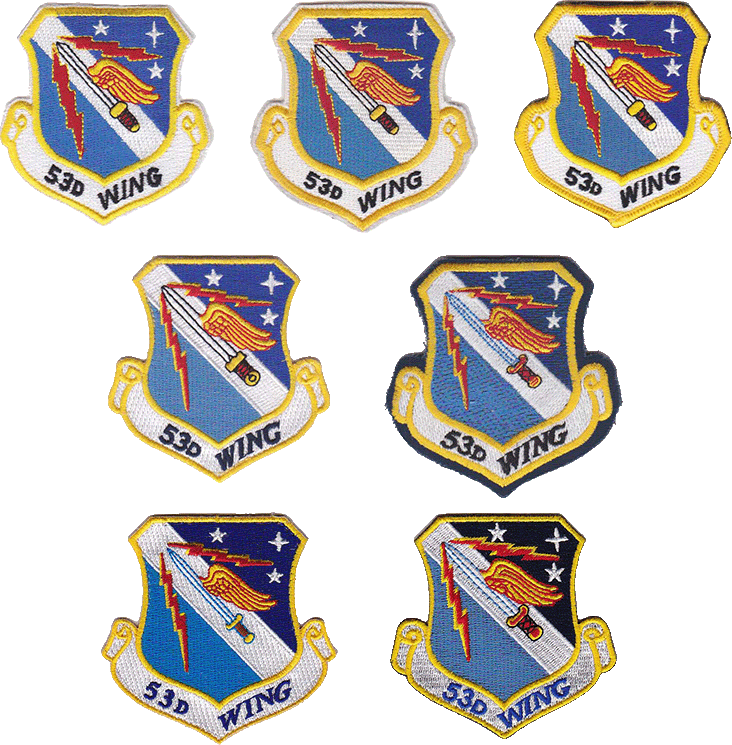
Variation
Difference in patches of an otherwise similar design, typically in size, manufacturing, colors, and/or wording (e.g. abbreviated versus spelled out). Collectors often classify a variation as “minor” and “major” although these terms are subjective.
(From the Webmaster’s Collection)
Return to Index
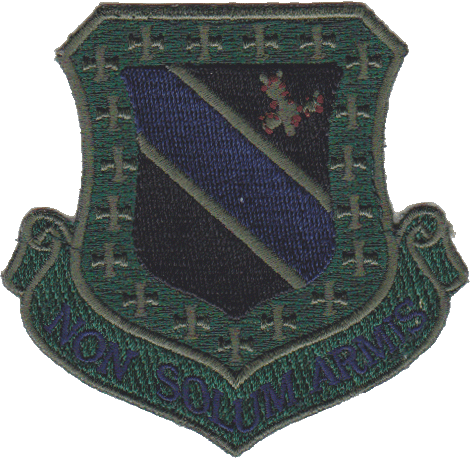
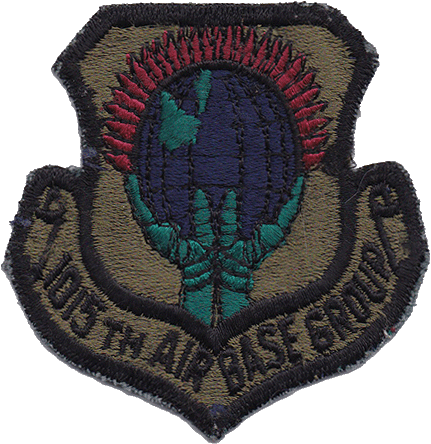
Woodland or Forest Subdued [also Subdued, Camo, Camouflaged]
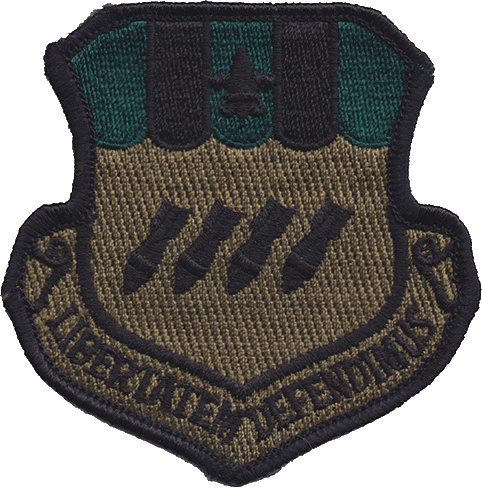
A subdued color palette used to convert full color patches for wear on the olive drab (OD) utility uniform (fatigues) and subsequently, the Battle Dress Uniform (BDU). Originally just called “subdued”, this color palette was later referred to as “Woodland Subdued” (a reference to the camouflage pattern used on BDUs) or “Forest Subdued”. The palette was formally introduced on 10 January 1979 and consisted of five colors (see table below) as outlined in Air Force Military Personnel Center Consolidated Base Personnel Office Letter (CBPOL) 79-002, “Subdued Configuration of the Utility Uniform”. Woodland subdued patches came into widespread use after 1977 and became mandatory for wear on the utility uniform in 1980. While primarily won on the utility uniforms, Woodland Subdued patches were also worn on flight suits by members of the Air Force Special Operations community. In the early 1990s, the Air Force Chief of Staff, General Merrill A. McPeak, ordered the removal of all organizational patches from the BDUs. This decision was subsequently reversed in mid-1990s by McPeak’s successor, General Ronald R. Fogleman. With the adoption of the Airman Battle Uniform (ABU) in the mid-2000s, the Air Force again elected to eliminate organizational emblems from the utility uniform. On 1 November 2011, BDUs were formally phased out, thus eliminating widespread use of Woodland Subdued patches. After this period Woodland Subdued patch were worn primarily on flight suits by Air Force Special Operations community and by some Airman on deployments to non-desert areas.
(From the Webmaster’s Collection)
(From the Webmaster’s Collection)
(From the Webmaster’s Collection)
(From the Webmaster’s Collection)
Woodland/Forest Subdued Color Palette
| Color | Yarn | Textile | Pantone Matching System (PMS) | Hex |
|---|---|---|---|---|
| Black | 67138 | 65018 | N/A | 000000 |
| Garnet | 67158 | 80083 | 209 | Unknown (6F263D) |
| Flag Blue | 67124 | 80077 | 282 | 011E41 |
| Spruce Green | 67130 | 80066 | 3302 | 004C45 |
| Olive Drab | 67133 | 66021 | 455 | 695A24 |
Return to Index
Wool Fabric
Wood is a natural fiber made into fabric that comes from sheep and other animals. Wool is occasionally used in making patches especially on older patches from the 1940s or earlier.